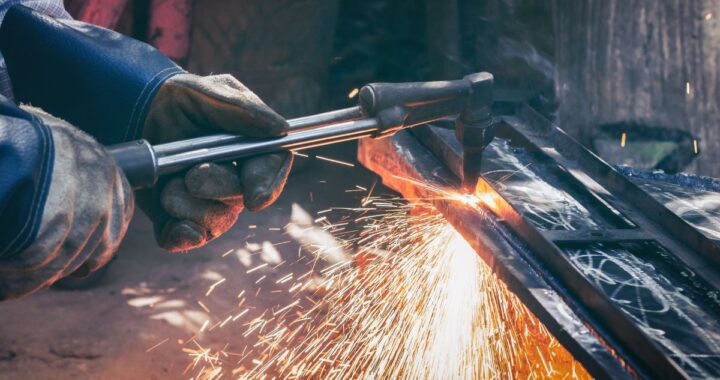
If you have ever walked a busy factory floor on a Monday morning, you know the scene. Pallets arriving, forklifts weaving through, contractors asking where they can plug in grinders, and someone in a hi-vis vest staring at a drawing, trying to work out how to cut a 6 m plate into six different pieces without wasting half of it.
Now add stainless steel into that picture. It is expensive, it is heavy, and once you cut it wrong, it stays wrong.
That is exactly where cut-to-size stainless steel changes the game. Not as a nice-to-have, but as a very practical way to save time, reduce waste, and keep your project teams calmer, safer, and more productive.
NSSC sits right in the middle of that conversation. From their operation in Bredell, Kempton Park, the team supplies and processes stainless for buyers across South Africa, from FMCG plants to mines, hospital groups, hotel chains, and large commercial property portfolios. And increasingly, those buyers want steel that arrives ready to slot into the job, not raw stock that still needs hours of cutting on site.
To achieve true precision in stainless steel processing, NSSC offers a complete range of specialised cutting and fabrication solutions. Our advanced laser cutting services deliver unmatched accuracy and clean edges across all stainless steel grades, while our high-powered plasma cutting services provide fast, efficient results for thicker materials. For straightforward, high-speed sheet processing, our guillotine cutting services ensure perfectly straight cuts with minimal waste. When projects demand complex perforations or intricate profiles, our CNC punching services offer precision and repeatability at scale. Finally, for components that require exact weld preps or aesthetic finishing, our bevelling services deliver smooth, uniform edges that meet the highest fabrication standards.
So, what does “cut-to-size” actually mean in real life?
Let’s keep it simple. When we talk about cut-to-size, we are talking about stainless sheet, plate, tube, or section that is:
- Selected in the right grade and thickness
- Cut or formed to the exact dimensions or profile needed
- Delivered to site as components that are ready to fit, weld, or bolt
In other words, instead of you receiving a standard plate and then asking a contractor to cut 25 custom panels from it in a dusty corner of your loading bay, NSSC does that cutting at their facility, with controlled processes and specialised machinery.
Because they run laser cutting, high-definition plasma cutting, waterjet cutting, guillotining, CNC tube bending, section and plate rolling, bending, polishing, CNC machining, milling, and welding all under one roof, “cut-to-size” is not a theoretical promise. It is literally how the shop floor is set up to work.
The result is that trucks arriving at your factory gate bring “parts” rather than “raw material”. That sounds like a small difference, but it has a big ripple effect on your time, your waste, and your risk.
Why time on-site is your most expensive material
People often treat material as the big cost item and labour as a line below it. In practice, time on site can hurt more than the material invoice.
Every extra day that a project runs late affects:
- Production schedules in FMCG and industrial plants
- Patient flow in hospitals waiting for new wards or theatres
- Room sales in hotels delaying renovations
- Tenant handovers in commercial buildings
Cutting stainless on-site adds steps and uncertainty:
- Raw stock arrives.
- It has to be offloaded, stored, and protected.
- Cutting equipment must be set up, powered, and supervised.
- Measurements are repeated under pressure, sometimes in poor lighting or cramped spaces.
- Offcuts pile up and get in the way.
- Someone realises a panel was cut wrong, so material must be reordered or patched.
Now compare that to a cut-to-size workflow:
- You send NSSC the drawings or measurements.
- NSSC nests and cuts the parts using CNC-controlled systems.
- Parts are labelled, palletised, and delivered in installation order if required.
- Your team focuses on fitting, fixing, and finishing.
You have fewer moving parts, fewer delays, and far less scope for measurement mistakes. You are not trying to run a mini fabrication shop in the middle of a live facility.
“But we already have contractors, can’t they just cut on site?”
They can. And often they do. The question is whether they should.
On-site cutting almost always seems cheaper at first glance, because the material cost looks lower and the cutting is hidden within a general labour rate. But there are hidden costs that buyers feel later:
- Standing time when there is a power issue or the tool breaks.
- Rework when a measurement was taken in a hurry.
- Safety incidents around sparks, noise, or the handling of heavy plates.
- Restricted access and disruption in sensitive areas like hospitals or high-care FMCG plants.
There is also the small but very real issue of morale. Your teams did not sign up to run a construction site forever. When projects drag because cutting and rework take longer than expected, frustration shows up in productivity long before it shows up in a formal report.
By shifting more of the cutting and preparation off-site to a controlled environment, you shorten the “messy” phase on your premises. That is good for operations, for safety, and for everyone who has to walk through those areas daily.
Where waste really comes from (and why it is not only the offcuts)
When people hear “waste”, they think of offcuts and scrap bins. But material waste in stainless has three layers:
- Offcuts you cannot use
- Rejected parts caused by cutting errors
- Material that is technically fine, but never used because the design changed and it was cut too soon
Standard plates and manual cutting tend to create all three.
At NSSC, the approach to waste is different. Because cutting is done with digital nesting software and CNC-driven machines, the team can:
- Arrange parts on a plate to increase yield
- Mix different jobs on the same plate where specs allow
- Adjust layouts quickly when a client updates a drawing
This is where their sheet cutting services really start to earn their keep. They help you get more usable pieces out of every plate, and they help you avoid those frustrating offcuts that are “almost the right size” but never quite usable for the next job.
You still have scrap, of course, but significantly less. And because NSSC handles stainless all day, they have established scrap channels that many sites do not. So the waste that does exist is handled more cleanly.
Waste of space, not just waste of steel
Here is something people do not always factor into their decisions: floor space is money.
Every extra plate, offcut, and temporary cutting station takes up room that could be used for:
- Extra racking in a warehouse
- Safer pedestrian walkways
- Additional process equipment
- Cleaner staging areas for quality inspection
With cut-to-size deliveries, you bring in exactly what you need, when you need it. Pallets arrive with parts counted, labelled, and ready for the next step. Once they are installed, the empty pallet leaves. No graveyard of half-used plates leaning against the back wall, waiting for “one day”.
That simple change improves housekeeping, which in turn supports safety and audit readiness. For food-grade facilities, pharmaceutical plants, and hospitals, this is not cosmetic, it is genuinely important.
Accuracy: the quiet hero of less rework
Let’s be blunt. On-site cutting with handheld tools is never as consistent as CNC-controlled cutting in a specialist shop.
NSSC’s laser cutting, high-definition plasma, and waterjet systems work from digital drawings. That means:
- Tight tolerances
- Clean edges
- Repeatable dimensions from part 1 to part 500
Now combine that with CNC tube bending, section and plate rolling, and machining where required. Suddenly, assemblies start to fit together the first time. Holes line up. Joints seat properly. Welders spend their time welding, not grinding and persuading parts to meet.
You know what? That is where a lot of time savings hide. Not in the dramatic stuff you see on a Gantt chart, but in the hundreds of little “make it fit” moments that never happened because the parts were correct.
Accuracy also reduces the temptation for “on the fly” adjustments that are not recorded. That is good practice for mines, hospitals, and large industrial sites where traceability and consistency actually matter.
Fabrication efficiency: less chaos, more flow
When you break it down, fabrication efficiency is about how smoothly work moves from one step to the next.
If your teams or contractors receive raw stock, they have to:
- Measure
- Mark up
- Cut
- Deburr and clean
- Check measurements again
- Then finally assemble or install
If they receive cut and prepared components, they can:
- Confirm identification
- Check critical dimensions
- Assemble, weld, or bolt in place
You are not just saving minutes, you are simplifying the workflow. And simpler flows mean fewer bottlenecks and fewer chances for work to stall because one key person or tool is busy elsewhere.
This is especially helpful on sites that are already complex, like mining plants with multiple contractors working in parallel, or hospitals where construction must weave around live clinical operations. Anything that cleans up the sequence of tasks has real value.
What this looks like in different sectors
It can help to picture the same principle in a few different environments.
FMCG and food processing
You are upgrading a bottling plant near Durban. Stainless platforms, guardrails, and pipe supports are needed. If NSSC supplies plates and tubes cut and formed to drawing, your contractor can install quickly during scheduled downtime windows. No dragging sparks into a production area, no guessing clearances when the clock is ticking.
Mines and mineral processing
At a mine in the Northern Cape, access is tight and weather can be harsh. Stainless launders, chutes, and walkways arrive in large raw pieces and still need cutting, which means more people at height and more hot work permits. Cut-to-size components reduce time working in those higher-risk zones and help you stick to shutdown schedules.
Hospitals and healthcare
In a new theatre complex in Gauteng, stainless is used for hygienic cladding, counters, and fixtures. On-site cutting spreads fine dust and metal into areas you want pristine. Getting components from NSSC in final dimensions helps limit on-site fabrication to a controlled area, keeping patient spaces cleaner and less disrupted.
Hotels and commercial property
A coastal hotel in KwaZulu-Natal wants stainless balustrades and service counters. Doing large amounts of cutting and grinding in an operational hotel disturbs guests and staff. Bringing in finished brackets, posts, and panels keeps the noisy, messy part away from your brand environment.
The quality and compliance angle
Stainless steel is often chosen not just for looks, but for hygiene, durability, and compliance. When NSSC processes material in-house under ISO TÜV 9001 certified quality systems, you have more confidence that:
- Grades are correct and traceable
- Cuts follow the latest approved drawings
- Processes are consistent from batch to batch
For buyers working inside regulated environments, from food and beverage plants to hospitals and pharmaceutical facilities, that kind of consistency is not a luxury. It helps you justify decisions during audits and reinforces that the materials supporting your operation are handled professionally.
Add in NSSC’s BBBEE Level 3 status, and you also have a supplier that supports local ownership goals while still delivering high technical standards. That combination matters for larger groups and listed entities that must answer to procurement policies, not just engineering needs.
Reducing risk, not just reducing waste
So far, we have spoken about time and physical waste. There is another kind of waste that is harder to measure but very real: risk.
On-site cutting of heavy stainless components brings risk through:
- Manual handling and awkward lift
- Working at height with cutting equipment
- Flying swarf and sparks in busy areas
- Noise in sensitive environments
When more of the work happens at NSSC’s facility on the corner of Pomona Road and 5th Avenue in Bredell, your site exposure shifts. Your teams still need to handle and install, of course, but a portion of the higher-risk activities has already been completed in a space designed for it.
This matters in industries where safety metrics are tightly watched, like mines, large warehouses, and major industrial plants. Every step that removes unnecessary risk from your premises supports those goals.
The digital side: from drawings to parts
Another advantage of using a specialist cut-to-size partner is how the digital workflow plugs into your existing design process.
- Your engineers detail the components in CAD.
- Files are shared with NSSC in agreed formats.
- NSSC programs those into their laser, plasma, or waterjet systems.
- Any clarifications are handled upfront, before steel is cut.
This means revisions are easier to manage. If a hole moves or a dimension shifts, it can often be updated digitally before the next batch is cut. That cuts down on expensive rework and scrap that comes from version control problems.
For fast-moving projects, or those where value engineering continues late in the process, that digital connection between your designers and NSSC’s production team helps keep everyone aligned, even as details change.
Cost conversations: how to present the case internally
Let’s be honest: “cut-to-size” can look more expensive on a per kilogram basis. So buyers often need to explain the logic upwards or sideways to colleagues who only see the column labelled “material”.
A few practical talking points:
- Compare total installed cost, not only material price
If a cut-to-size solution reduces installation time by two days on a high-value production line, the labour and downtime saved can outweigh the extra cutting cost very quickly. - Highlight reduced rework and scrap
Show how many times in previous projects panels had to be redone or patched. Even if you do not have exact numbers, your maintenance team usually has stories that make the point. - Use risk language for high-care environments
In hospitals and food plants, less on-site cutting means less dust, less noise, and fewer disruption points. That supports infection control or hygiene programs, which management understands. - Emphasise planning simplicity
When components arrive ready to install, project phasing is easier. You are less dependent on specialist cutting skills being available on particular days.
If you want to go further, NSSC can help with technical input that explains why certain items are better done off-site. That can help you turn “I think this is better” into “here is the reasoning” in a way that lands in a boardroom or project review.
NSSC’s capabilities: not just cutting, but complete preparation
What makes cut-to-size work really well is when the supplier can do more than one type of cutting.
NSSC covers:
- Laser cutting for precision and clean edges on sheet and plate
- High-definition plasma cutting for thicker sections
- Waterjet cutting where heat input must be minimal
- Guillotining for straight shearing
- CNC tube bending and section rolling for frames, rails, and curved elements
- Plate rolling for tanks, ducts, and cylindrical parts
- Polishing for architectural or hygienic finishes
- CNC machining and milling for precise holes, slots, and features
- Welding where subassemblies need to be supplied as part-built units
This allows you to think in terms of assemblies, not just individual pieces. For example, handrail posts can arrive bent, drilled, and ready to weld to baseplates. Cladding panels can arrive with cut-outs for services already in place.
Because all of this runs through a single operation, you are not juggling multiple suppliers trying to coordinate who does what first.
A buyer’s mental checklist for cut-to-size stainless orders
When you are getting ready to send a spec or RFQ to NSSC, it helps to think through a few points:
- Which components are repeated many times and would benefit most from precise cut-to-size supply?
- Where is on-site cutting difficult, risky, or heavily constrained by hygiene rules?
- Which grades and thicknesses are used, and can similar items be grouped for cutting and nesting?
- Are there assemblies that could be partially fabricated by NSSC before delivery?
- Do drawings clearly indicate tolerances and finishes so that parts arrive ready to fit?
Even running through these questions informally can reveal areas where cut-to-size processing will deliver immediate gains and others where raw stock is still acceptable.
Connecting the dots: time, waste, and long-term value
If you strip away the detail, the logic behind cut-to-size stainless is pretty straightforward:
- You send more information upfront (drawings, dimensions).
- NSSC puts more work into processing at their facility.
- You do less cutting, adjusting, and fixing on-site.
In exchange, you get:
- Shorter installation times
- Less material waste
- Cleaner, safer, and more organised working areas
- Better consistency and quality of finished work
For factories, warehouses, mines, hospitals, hotel groups, and commercial property owners, those benefits feed into the same goal: reliable assets in service, with fewer surprises and less noise in everyday operations.
Bringing NSSC into your next project conversation
From their base in Bredell, Kempton Park, NSSC serves clients right across South Africa with both stock material and processed stainless parts. Their role is not only to sell steel, but to act as a precision partner who helps you match grade, thickness, and processing to what your site actually needs.
Whether you are planning a new FMCG line, upgrading a mine plant, fitting out hospital theatres, or updating hotel kitchens, it is worth asking early:
- Which parts of this specification should arrive ready cut and formed?
- Where can off-site processing reduce our risk and waste?
- How can we use NSSC’s cutting and forming capabilities to make installation simpler?
You can start that conversation with a drawing pack, a bill of quantities, or even a simple sketch and a phone call. The NSSC team is available on +27 11 552 8800 or info@nssc.co.za and can work with you to turn those ideas into clear, costed proposals.
In the long run, the question is simple. Do you want your site to feel like a fabrication yard every time you install stainless, or do you want stainless components that arrive ready to fit, so your teams can get on with the work that really matters? With cut-to-size support from a specialist partner, that choice becomes much easier.