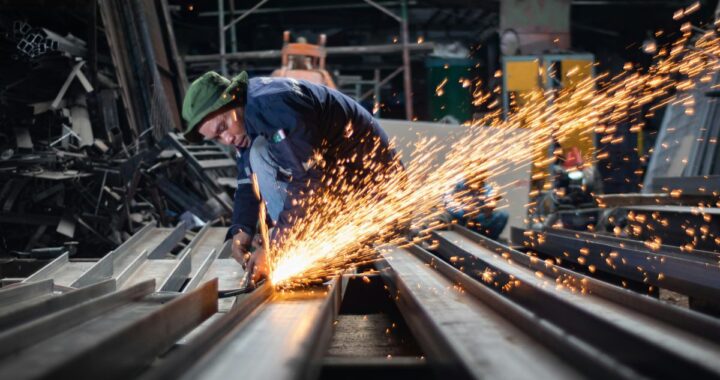
Stainless never fails on paper – it fails in the field
If you read a catalogue or a data sheet, stainless steel looks nearly unstoppable. Corrosion resistant, hygienic, easy to clean, strong, tidy. On paper, it is the hero material.
Walk a factory floor, a mine plant, a hospital back-of-house or a hotel kitchen a few years after commissioning, and the story can look very different. You might see rust streaks on welds, tea staining on balustrades, leaking sumps, warped brackets or rails that came loose long before their time.
Most of the time, the problem is not “stainless is bad”. The problem is how it was cut, handled, welded, cleaned and installed.
That is what this article is really about. Not textbook theory, but field lessons – the kind of detail that makes the difference between stainless that keeps its promise and stainless that becomes a maintenance headache.
National Stainless Steel Centre (NSSC), based on the corner of Pomona Road and 5th Avenue in Bredell, Kempton Park, lives in the middle of this story. With capabilities across laser cutting, high definition plasma cutting, waterjet cutting, guillotining, CNC tube bending, section and plate rolling, bending, polishing, CNC machining, milling and welding, plus a wide range of sheets and plates, including duplex and other alloys, the team sees both sides: the right way to fabricate, and the problems that arrive when things are rushed.
To achieve true precision in stainless steel processing, NSSC offers a complete range of specialised cutting and fabrication solutions. Our advanced laser cutting services deliver unmatched accuracy and clean edges across all stainless steel grades, while our high-powered plasma cutting services provide fast, efficient results for thicker materials. For straightforward, high-speed sheet processing, our guillotine cutting services ensure perfectly straight cuts with minimal waste. When projects demand complex perforations or intricate profiles, our CNC punching services offer precision and repeatability at scale. Finally, for components that require exact weld preps or aesthetic finishing, our bevelling services deliver smooth, uniform edges that meet the highest fabrication standards.
It is not always the grade – often it is the fabrication
Here is the thing that can be hard to admit in a project review. Many failures that look like “bad material” are actually the result of how that material was treated.
Common threads show up again and again:
- Contamination from carbon steel tools on stainless
- Poor weld preparation and shielding
- Heat tint left untreated
- Over-aggressive grinding that damages the passive layer
- Design that traps liquid and dirt
- Shortcuts in cleaning and inspection
You know what? Stainless is both forgiving and unforgiving. It will tolerate a lot of abuse for a while, which makes people think they got away with a shortcut. Then, over time, that shortcut turns into pitting, cracking or premature failure.
The good news is that much of this can be avoided if buyers and project teams know what to look for and what to insist on. Let us walk through a few real world style lessons.
Field Lesson 1 – when the wrong tools meet the right material
Picture a logistics warehouse extending a loading bay. The spec calls for stainless bollards and rails near dock doors because forklifts, trucks and weather all combine in that space. So far, so good.
On-site, the installer brings a mix of tools that have been used for years on mild steel. Grinders, clamps, measuring tape, a few well worn trestles. Cutting and prepping happens in a noisy, dusty corner of the yard.
Nobody wipes down the disks or separates the work area for stainless and carbon. Hot sparks and swarf from carbon steel work float around freely. The stainless parts are placed directly on carbon steel tables.
When the job is signed off, everything looks neat. Shiny, new, solid. Six months later, small rust spots appear on some surfaces. A year later, certain areas show clear staining around welds and in random patches.
What happened? Tiny particles of carbon steel contaminated the stainless surfaces during prep and fabrication. Those particles rust, and that rust stains and undermines the surface. To the untrained eye, it looks like the stainless itself is corroding fast.
This is exactly the kind of scenario NSSC designs against. In a controlled stainless environment, tools are managed, surfaces are kept clean, and cross contamination is treated as a real risk, not a minor detail. When parts arrive on site already cut, rolled and prepared, the exposure to mixed-tool chaos is far lower.
Field Lesson 2 – heat tint and “we will clean it later”
Another common pattern shows up in welded structures.
Imagine a new gantry and platform in a food plant. The main members and handrails are stainless. The welding crew works under time pressure. Fit-up looks good, welds are sound, but shielding is not perfect and heat input is on the high side.
The result is visible heat tint – those blue, gold and brown colours along the weld beads and adjacent material. Everyone knows they should go back and clean this properly. But the project is running behind, commissioning is looming, and there is a long list of snag items.
So someone says, “We will clean the welds in the next shutdown.” Then everyone moves on.
The untreated heat tint has already thinned or damaged the passive layer in that zone. With cleaning chemicals, condensation, and small amounts of chloride present in the environment, these areas are now more vulnerable to attack. They become the first places where staining, pitting or cracks show up.
This is a classic route into stainless steel welding defects that only appear later. The weld might be structurally fine on day one, but from a corrosion point of view it was already compromised.
In NSSC’s world, welding and post-weld cleaning go together from the start. Proper shielding, control of heat input, and post-weld cleaning and, where needed, passivation are part of the process, not optional extras. That is a big part of why components processed correctly tend to behave better in aggressive environments.
Field Lesson 3 – mixing metals and hidden galvanic cells
Now let us step into a coastal hotel project. The design calls for stainless balustrades on balconies, with a nice clean finish for guests to lean on while they look toward the ocean.
The main posts and rails are stainless. To save a little time and simplify sourcing, the installer uses standard carbon steel fasteners and brackets in places where “they will not be visible”. They might even say, “The stainless will protect the other bits.”
Over time, salt laden air and moisture reach those connections. You now have dissimilar metals in electrical contact in a conductive environment. In simple terms, you have built small galvanic cells. One metal becomes the anode, one the cathode, and corrosion focuses itself.
The result is premature damage at the connections, even though the bulk of the stainless is technically fine. Handrails feel loose sooner than they should. Staining appears at junction points. Maintenance staff see “rust on stainless” and lose confidence in the material in general.
This is a quiet example of fabrication mistakes that start as “it will be okay” decisions. On a drawing, the balustrade spec said stainless. In reality, the system became a mix of stainless and non-stainless components.
NSSC’s technical team often helps clients think through fasteners, support brackets and hidden components, not just the visible main items. When you treat the system as a whole, you are less likely to sabotage your own stainless with mismatched parts.
Field Lesson 4 – design that traps water, dirt and trouble
Sometimes the steel is perfectly fine, the welds are sound, and there is no contamination. The failure still happens because of design.
Consider a set of external stairs and landings at a mine office block. The structure uses stainless components in places, partly for durability and partly for appearance. Due to architectural decisions, the detailing includes flat surfaces and pockets where water can sit.
During the rainy season, water gathers in these small valleys. Dust settles. Over time, salts and debris build up. On cooler nights and hot days, you get repeated wetting and drying cycles.
Those trapped pockets become localised attack zones. Tiny pits form first. Then, as they deepen, they catch more contamination. Before long, you have visible damage in specific areas while the rest of the structure still looks new.
This kind of pattern is exactly the kind you see in a corrosion failure case study written up after a problem. The conclusion often reads something like, “Design allowed standing water and debris to accumulate, leading to localised corrosion despite the use of a suitable grade.”
NSSC cannot redesign someone else’s building, but it can support better detailing on the stainless elements it supplies. For example, by advising on slopes, drain holes and shapes that shed water instead of holding it. That might sound small, but on a twenty-year structure it is the difference between a one-off install and repeated repair work.
Field Lesson 5 – “it looks fine” is not a quality standard
The last lesson is a human one.
On many projects, the acceptance test for stainless fabrication is simple: does it look straight and reasonably neat? If so, tick it off. Move on.
The problem is that a lot of quality issues are invisible to a quick glance. Incorrect filler materials, poor root penetration on welds, lack of back purging, tiny undercuts, or slight misalignment that puts stress into every cycle – these do not always show up in a casual visual check.
In a hospital kitchen, that might mean a counter that warps under heat and cleaning. In a petrochemical plant, it might mean a nozzle or branch connection that starts cracking after repeated thermal cycles. In a food factory, a small crevice may become a hygiene risk.
Real quality control has to look beyond appearance. It includes:
- Confirming material grades via certificates and markings
- Checking welds against agreed procedures
- Verifying surface finish where hygiene or cleaning matter
- Inspecting dimensions and tolerances at key interfaces
NSSC’s ISO TÜV 9001 certified quality system is built exactly around that idea. It is not about ticking boxes for the sake of paperwork. It is about making sure that when a customer accepts a batch of components, they are accepting more than just a nice shine.
Turning lessons into better specifications
So what can a buyer or project manager actually do with all these field lessons?
You do not have to become a welding inspector or a metallurgist. But you can start turning vague requirements into clear, practical specifications. For example:
- Instead of “stainless steel handrails”, say “316 brushed finish with stainless fasteners, fabricated in a dedicated stainless environment, welds cleaned and passivated.”
- Instead of “stainless tank”, ask for “specified grade, controlled welding procedures, full post-weld cleaning, designed to avoid standing liquid on external surfaces.”
- Instead of “supply and fit brackets”, say “all stainless components, no carbon steel attachments, no mixed fasteners, evidence of grade supplied.”
You can also ask targeted questions during supplier selection:
- How do you prevent cross contamination between carbon steel and stainless work?
- What is your approach to welding stainless – do you follow written procedures?
- How are welds cleaned and passivated?
- How do you manage traceability of material grades on cut parts?
If a supplier struggles to answer, that is a sign. If they answer confidently and can back it up with a visit, photos or documentation, you are on safer ground.
NSSC welcomes these kinds of questions, because its entire facility is built around stainless processing. It is easier to show good practice when that is your default, not a special effort.
How NSSC reduces risk before parts reach the site
Let us connect these lessons back to what NSSC actually does for you as a buyer.
Because NSSC combines material supply with in-house processing, it can control the entire chain from sheet or plate to finished component. That includes:
- Selecting appropriate grades from its inventory of stainless, duplex and other alloys
- Cutting material by laser, high definition plasma, waterjet or guillotine as needed
- Forming via CNC tube bending, section and plate rolling and press bending
- Machining and milling where precise interfaces are required
- Welding with stainless aware procedures
- Polishing and finishing for hygienic or architectural surfaces
This means a lot of the risk points you saw in those field stories are moved off your site and into a controlled workshop that deals with stainless all day.
The result is simple. By the time a pallet comes off a truck at your factory, mine, hospital, hotel or warehouse, the hardest parts of the job – the nuanced parts that can quietly damage stainless – are already handled.
You still need good installation practice, of course. But you are not trying to run a stainless fabrication shop on a concrete slab between forklifts and scaffolding.
Practical checklist for avoiding repeat failures
To make this tangible, here is a short checklist you can keep in mind on your next stainless-heavy project.
Ask yourself:
- Have we specified the right grade for the environment, and is it clearly written down?
- Are we using a fabricator that understands stainless, or one that mainly does carbon steel and “also does stainless”?
- Have we required a clean stainless handling area, with separated tools where possible?
- Are welding procedures, filler materials and post-weld cleaning clearly part of the scope?
- Have we looked at design details that might trap water, dirt or chemicals on stainless surfaces?
- Are fasteners, supports and hidden components in the same material family, or are we mixing metals without thinking about it?
- Will we get material and quality documentation that lets us trace what is actually installed?
If you can answer yes to most of these, your chances of long-term success go up quickly.
If you cannot, that is the moment to bring a specialist like NSSC into the conversation. They can help tighten the spec before any steel is cut, which is far cheaper than trying to fix problems after installation.
Real-world sectors, same core lessons
Although the examples in this article move between FMCG, mines, hospitals, hotels and commercial properties, the underlying lessons stay the same.
- In a food factory, poor stainless welding and cleaning can become both a corrosion problem and a hygiene risk.
- In a mine, rushed fabrication on stainless chutes or launders can lead to premature wear and repeated repairs during tight shutdowns.
- In hospitals, badly finished stainless in clinical areas can undermine infection control programs or create cleaning headaches.
- In hotels and leisure sites, external stainless structures that are not detailed or fabricated correctly can age badly in coastal air, affecting both safety and brand perception.
- In industrial warehouses, structural and protective stainless elements can suffer if mixed with carbon steel fixings or cut with the wrong tools.
The environments are different. The budgets and pressures are different. But stainless responds to the same basic physics and chemistry everywhere. Get the fabrication right, and it rewards you for a long time. Get it wrong, and it reminds you quietly and repeatedly.
Bringing it all together – choose process, not luck
Avoiding fabrication failures is not about being perfect. It is about stacking the odds in your favour.
You do that by:
- Choosing appropriate grades for your sector and environment
- Working with a fabricator who lives and breathes stainless, not one who treats it as an occasional variation
- Writing specifications that include how things are made, not only what they are called
- Taking design, cleaning and inspection seriously, even when projects run fast
National Stainless Steel Centre positions itself as a “precision partner” for exactly this reason. From its facility in Bredell, Kempton Park, the company serves clients across South Africa through both bespoke quotations and an online shop, backed by ISO TÜV 9001 quality systems and BBBEE Level 3 status.
If you have projects on the horizon where stainless is more than a decorative detail, it is worth bringing NSSC into the discussion early. Share your drawings, your site conditions, your pain points from past jobs. Learn from those field lessons before they repeat themselves.
Because stainless, done properly, is one of the most reliable allies you can have in harsh, busy, high-demand environments. Stainless, rushed and mis-handled, is just another source of callbacks and complaints. The difference sits in the fabrication, and in the partner you trust to do it right.