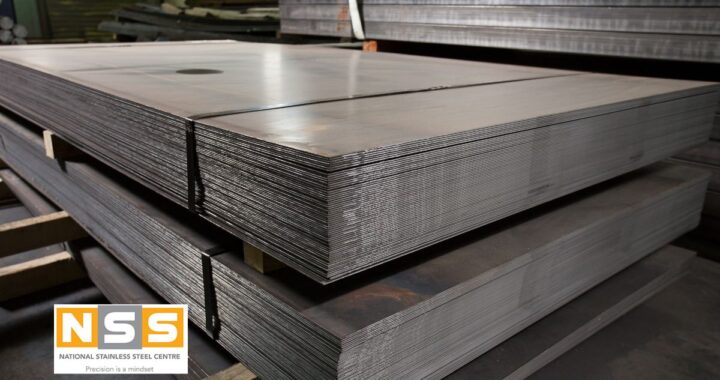
Stainless steel sheet is quoted, not listed. The price moves with the nickel market, the rand against the dollar, and what you actually need: grade, thickness, finish, sheet size and quantity. No fixed price list in South Africa holds true for long.
That is not what a buyer under deadline wants to hear. What this guide gives you instead is how a sheet price is built up, and how to work out a defensible number yourself before you compare quotes.
Key takeaways
- Sheet price is built from the international mill price in dollars, the exchange rate, duty and freight, then local handling, finish and cutting. No supplier controls more than a slice of it.
- Quotes move because merchants price on replacement cost, what it takes to refill the rack, not what the sheet on the rack originally cost them.
- Strip every quote back to a rate per kilogram for the finished product. Headline sheet prices hide too much to compare fairly.
- You can calculate sheet mass yourself from dimensions, thickness and density. Mass times the current rate is the honest comparison.
- Most savings come from specification discipline, not from arguing about rate.
Why there is no fixed price list
Because the inputs move faster than any published list could keep up with.
A sheet price in South Africa starts with the international mill price, quoted in US dollars and driven largely by nickel. That gets converted at the day’s exchange rate, then duty, freight and handling are added, then the merchant’s margin, finish and cutting. Every one of those moves independently.
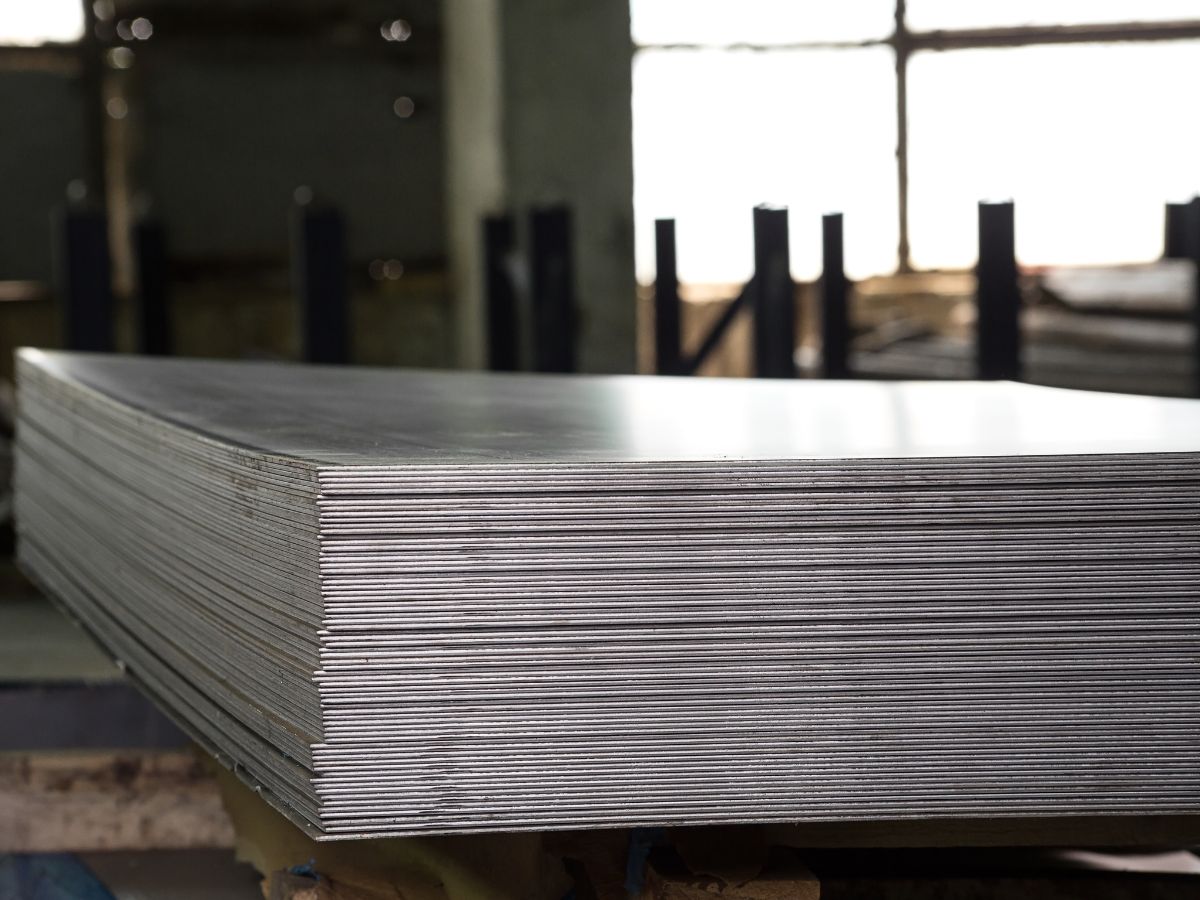
So a sheet you priced three weeks ago can come back higher, or lower, today. Nobody is being cagey. The inputs moved, and any supplier publishing a fixed list would either be quoting stale numbers or padding them against movement.
What determines the price of a stainless steel sheet
Five things, in roughly this order of impact.
Grade
Alloy content drives cost. 316 carries a premium over 304 because of its molybdenum and higher nickel loading. Ferritic grades sit below both because they carry little or no nickel. Which grade you actually need is a specification question rather than a price one, covered in our stainless steel grades explained guide.
Thickness
Price scales with mass, and mass scales with thickness. Double the thickness of the same sheet and you roughly double the metal content. Above a certain point sheet crosses into plate, which is priced on its own basis.
Surface finish
2B, the standard mill finish, is the reference point. Brushed finishes sit above it. Bright annealed and mirror sit higher again. Protective film for scratch resistance is usually a small addition.
Sheet size and cut to size
Standard sizes are the cheapest way to buy, because nothing is left over. Odd sizes mean you pay for material you do not use unless the supplier can absorb it into another job. Cut to size stainless steel covers how that works and when it saves money.
Quantity
Larger orders unlock better rates per kilogram, and one delivery of ten sheets beats ten deliveries of one on both rate and freight.
Price drivers at a glance
| Driver | Effect on price |
|---|---|
| Grade | Higher alloy content, higher price |
| Thickness or gauge | Rises with mass, roughly linearly |
| Surface finish | Each step above 2B adds a premium |
| Sheet size | Off-standard sizes leave material you pay for |
| Quantity | Larger orders improve the rate per kilogram |
| Cutting requirement | Guillotine, laser and water jet each carry their own rate |
How stainless steel is priced: by mass, by sheet or by area
Underneath every quote, stainless steel is a commodity sold by mass. Sheets are quoted per sheet and sometimes per square metre, but both are derived from mass times a rate.
That matters when you compare. A price per sheet tells you nothing until you know the sheet size and thickness. A rate per kilogram is comparable across suppliers, sizes and thicknesses. Ask for it. The same logic applies across flat bar, plate and section, all of which are priced the same way.
What moves the price month to month
Three dials.
The nickel price is the first, because the most widely used grades carry meaningful nickel. When nickel runs, they run with it.
The rand against the dollar is the second. Mill invoices land in dollars, so a weaker rand raises the landed cost of the next container regardless of what happens on the metal markets.
The mill base price is the third, shifting with global supply, export policy and shipping rates out of Asia and Europe.
Move one dial and the price moves. Move two in the same direction and you feel it.
This is also why quotes carry a validity period. Merchants revalue stock regularly and price on replacement cost, what it will take to refill the rack, rather than what the sheet in front of you originally cost. Ask what your quote is based on and how long it holds.
How to estimate your own sheet mass
Work this out before you compare quotes. It is the only way to tell whether a number is fair.
- Convert dimensions to area in square metres. Length in metres multiplied by width in metres. A sheet measuring 2.5m by 1.25m gives 3.125 square metres. Use your own sheet dimensions here rather than assuming a standard.
- Convert area and thickness to volume in cubic metres. Area multiplied by thickness in metres. At 1.5mm, that is 3.125 multiplied by 0.0015, giving 0.00469 cubic metres.
- Convert volume to mass using density. The common 300 series grades have a typical density around 7,900 kilograms per cubic metre. So 0.00469 multiplied by 7,900 gives roughly 37 kilograms for that sheet.
Stop there. Mass multiplied by the current rate your supplier quotes, plus any finish premium and cutting, is your number. Mill tolerance means actual mass varies slightly from calculated, so treat this as a check rather than an invoice.
If a quote sits well above or below what that calculation suggests, ask why. There is usually a reason, and it is usually worth knowing.
Where buyers overspend
The cheapest sheet is the one you do not waste. Most savings on a job come from specification discipline rather than from arguing about rate.
Over-specifying the grade. A higher grade than the application needs is money spent on corrosion resistance you will never use. Check the requirement before you specify.
Over-specifying the finish. A 2B sheet under paint or lagging costs less than a brushed one nobody will see.
Buying off-standard sizes by default. Where the design allows a standard size, use it. Where it does not, order cut to size rather than buying full sheets and storing the remainder.
Splitting the order. Consolidating into one delivery improves both rate and freight.
Leaving no lead time. Rush jobs pull from whatever is on the rack at whatever it costs that day. Notice lets a supplier price it properly.
Pricing cutting separately, late. Get guillotine cutting or any other process priced on the quote, not added at collection.
How to get an accurate quote first time
Send grade, finish, thickness in millimetres, sheet dimensions, quantity and any cutting requirement in one message. That is enough to price stainless steel sheet without a call back to you.
Ask for a written quotation listing grade, finish, thickness, size, quantity, cutting, lead time, validity, and whether VAT and delivery are included. If all of those are on the page, you are dealing with someone who intends to honour it.
Two things worth confirming before you pay. Ask whether a mill certificate is available, because without one you cannot prove what you installed. And check whether thickness is quoted nominal, since a sheet at the bottom of mill tolerance weighs less and behaves differently under bending.
Request a current price
Priced on the day
Send us the grade, thickness, dimensions and quantity and we will come back with a current, itemised quote against live sheet stock. Priced on the day, with nothing added at invoicing. Get in touch and we will price the job on today’s market. Over 40 years of trading, ISO certified, based in Kempton Park.
Frequently asked questions
How much does a stainless steel sheet cost in South Africa?
There is no fixed answer, because the price is quoted rather than listed. It depends on grade, thickness, finish, sheet size and quantity, and it moves with the nickel market and the rand. Send us the specification and we will quote against current stock on the day.
Why is there no stainless steel sheet price list?
Because the inputs change faster than a list could keep up with. The mill price is set in dollars, converted at the day’s exchange rate, then duty, freight, handling and finish are added. Any published list would either be out of date or padded with margin to protect against movement.
Why do stainless steel prices change month to month?
Three things move it: the nickel price, the rand against the dollar, and the international mill base price. Merchants also price on replacement cost, meaning what it takes to restock rather than what the current stock cost them, so quotes track the market rather than the warehouse.
Is 316 stainless steel more expensive than 304?
Yes. 316 contains molybdenum and carries a higher nickel loading, both of which cost more. The size of the difference moves with the metal markets rather than staying fixed. Whether the premium is worth paying depends on the application, not the budget.
Is stainless steel sold by weight or by sheet?
Underneath, it is sold by mass. Sheets are quoted per sheet and sometimes per square metre, but both derive from mass multiplied by a rate. When comparing suppliers, ask for the rate per kilogram, because it is the only figure that compares fairly across different sizes and thicknesses.
What do I need to provide for an accurate stainless steel sheet quote?
Grade, finish, thickness in millimetres, sheet dimensions, quantity and any cutting requirement. Include your deadline and whether you are collecting or need delivery. Sending all of it in one message means the quote comes back without a call to fill in the gaps.