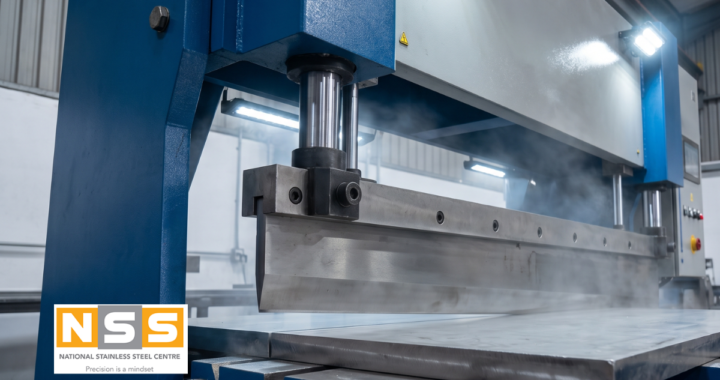
When a project calls for fast, clean, straight cuts in sheet or plate, few processes beat a well-set guillotine. It’s one of the oldest tricks in the metalworking book, and still one of the most economical. At NSSC, we get asked about guillotine cutting services almost every week by fabricators, engineers and procurement buyers who need stainless cut to size without paying laser prices for a job that simply doesn’t need a laser.
With over 40 years working stainless steel and an ISO-certified process behind every job, we’ve built our shearing line around one idea: the right tool for the job, every time. In this guide we’ll walk through how guillotine cutting works, the materials and thicknesses it handles best, the industries that lean on it daily, and how to choose a provider that actually delivers on tolerance and turnaround. Whether you’re sourcing from Johannesburg, Durban or further afield, you’ll finish this read knowing exactly when shearing is the right call, and when it isn’t.
Key Takeaways
- Guillotine cutting services offer the most cost-effective solution for straight-line cuts in sheet and plate metal, typically three to five times cheaper than laser cutting for geometry-suitable jobs.
- Professional guillotine cutting delivers rapid turnaround, clean burr-light edges, and exceptional repeatability with CNC back gauges accurate to ±0.1 mm, ideal for high-volume batch production.
- Guillotine cutting works best on ductile materials including mild steel (up to 10-12 mm), stainless steel grades 304, 316 and 430 (up to 6 mm), and aluminium (8-10 mm), with limitations on curves and intricate profiles.
- When selecting a provider, verify capacity range, tolerance guarantees (±0.2 mm minimum), material stock availability, secondary process capabilities, and transparent per-cut pricing.
- Industries from food processing and construction to automotive and mining rely on guillotine cutting for high-volume rectangular blanks, while the process produces minimal waste and heat-affected zones, delivering superior material yield.
What Is Guillotine Cutting and How Does It Work?
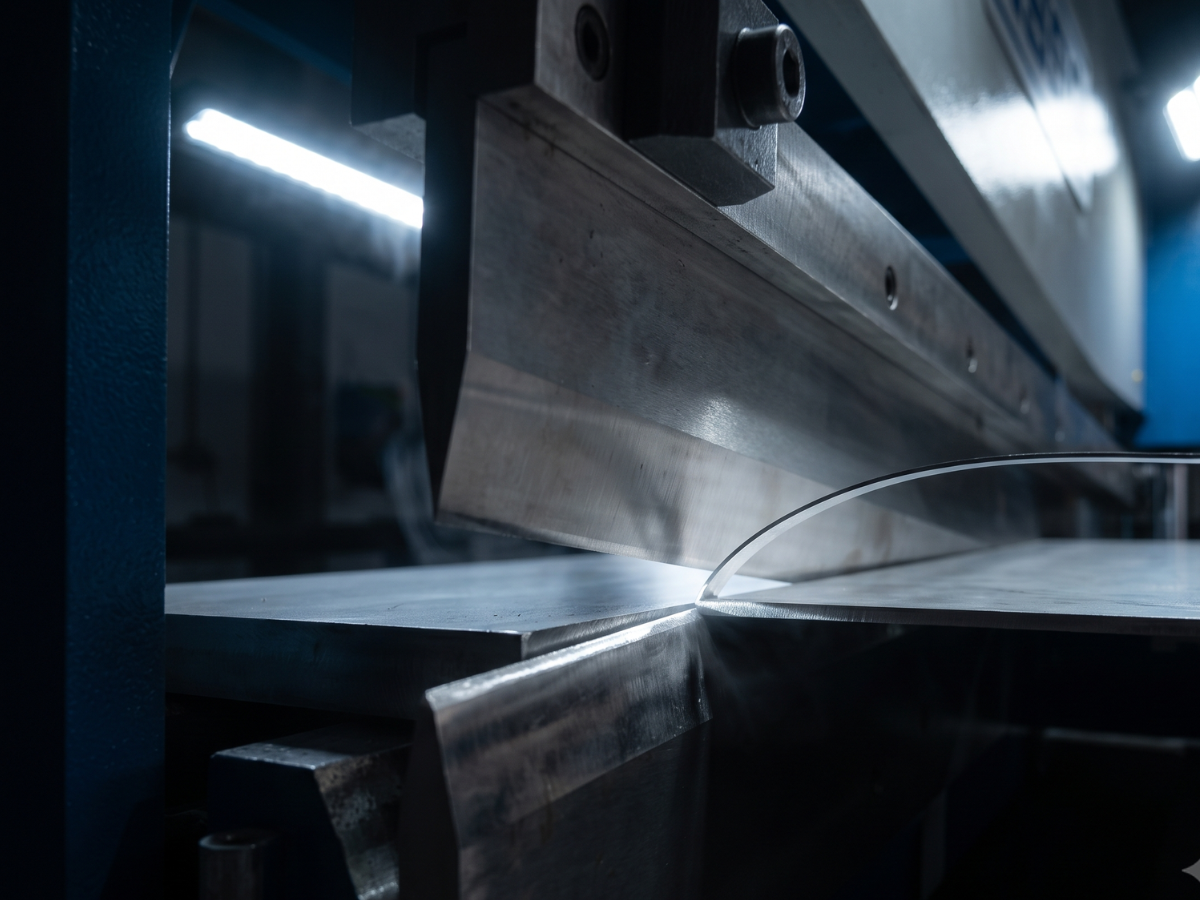
Guillotine cutting, sometimes called shearing, is a mechanical process that slices sheet or plate metal in a straight line using a moving blade against a fixed lower blade. Think of a pair of giant industrial scissors, only with hydraulic or mechanical force behind them and tolerances measured in fractions of a millimetre.
The sheet is clamped in place, the upper blade descends at a slight angle (called the rake angle), and a clean, burr-light edge is produced in a single stroke. There’s no heat, no melt zone, no consumable gas. Just steel meeting steel.
The CNC guillotines we run shear stainless steel up to around 3,000 mm long and 6 mm thick in a single pass, with back gauges that position material to within ±0.1 mm. That’s why, for straight-line work on sheet metal shearing jobs, it remains the fastest and most cost-effective method on the shop floor, often three to five times cheaper per cut than laser when geometry allows.
The limitation? Guillotines only cut straight lines. Curves, holes and intricate profiles need a different tool entirely, which is where our laser cutting service takes over.
Key Benefits of Professional Guillotine Cutting Services
The case for outsourcing guillotine cutting comes down to four things: cost, speed, edge quality and repeatability.
- Cost efficiency. No gas, no laser optics, no plasma consumables. Shearing has the lowest cost-per-cut of any sheet-metal cutting process, which matters when you’re producing blanks in volume.
- Speed. A single stroke takes seconds. Production runs of identical blanks fly through compared with profile cutting.
- Clean straight edges. A properly maintained guillotine produces a square, near-burr-free edge that often needs no secondary finishing before bending or welding.
- Repeatability. CNC back gauges mean the 500th piece is dimensionally identical to the first. For batch work, that consistency is gold.
There’s also a sustainability angle worth mentioning. Because shearing produces no heat-affected zone and almost no offcut waste beyond a small drop strip, material yield from a coil or sheet tends to be higher than with thermal processes. For buyers tracking scrap rates, that’s a real line-item saving over the year.
Materials Suited to Sheet Metal Shearing
Not every metal takes kindly to a guillotine blade. The process works best on ductile materials within a sensible thickness range, typically up to 6 mm for stainless, more for mild steel, less for harder alloys. Here’s how the common grades stack up.
Mild Steel and Carbon Steel Cutting Services
Mild steel is the bread and butter of any shearing line. It’s ductile, predictable and forgiving. Most industrial guillotines will shear mild steel up to 10-12 mm thick without breaking a sweat, producing edges clean enough to weld directly.
Carbon steel grades behave similarly, though as carbon content rises the material gets harder and the maximum shear thickness drops. For structural blanks, brackets, base plates and gusset stock, steel cutting services built around a guillotine are usually the most economical route, particularly when the geometry is rectangular or trapezoidal.
One tip from the shop floor: always specify the grade up front. A request for “6 mm steel cut to size” could mean S275, S355 or something tougher, and blade settings change accordingly.
Stainless Steel Shearing and Aluminium Applications
Stainless steel shearing is our specialism. Grades 304, 316 and 430 all shear cleanly up to around 6 mm on our machines, though we typically recommend laser cutting above 5 mm where edge cosmetics matter. Stainless work-hardens fast, and thicker shears can show slight edge distortion if blade clearance isn’t dialled in. After four decades in stainless, getting that clearance right is second nature to our operators.
Aluminium is even more forgiving. Its low shear strength means a standard guillotine can comfortably handle 8-10 mm in common grades like 5083 and 6082. Just be aware that softer aluminium tempers can show slight roll-over on the cut edge, which may need a quick deburr before powder coating.
Industries That Rely on Guillotine Cutting
Walk into almost any metalworking supply chain and you’ll find a guillotine somewhere upstream. The process underpins a surprising slice of the manufacturing economy.
- Food and beverage processing. Stainless blanks for tanks, hoppers, splashbacks and conveyor side rails, all sheared to size before forming.
- Construction and architectural fabrication. Cladding panels, balustrade infills, flashings, gutter blanks and skirting strips.
- HVAC and ducting. Galvanised and stainless sheet sheared into rectangular blanks for duct fabrication, often in high volumes.
- Mining and heavy industry. Wear-plate blanks, chute liners and hopper sides in mild steel and abrasion-resistant grades.
- Signage and shopfitting. Aluminium and stainless strips for trim, trays and brackets.
- Automotive and trailer manufacturing. Floor plates, side panels and reinforcement strips.
What ties these industries together is volume and geometry. When you need hundreds of identical rectangular pieces, shearing wins on price and speed every time. The moment you need a hole, slot or curve, you graduate to laser or plasma cutting for the thicker work.
Choosing the Right Guillotine Cutting Provider
Not all shearing services are equal. The machine matters, but so does the operator, the back-gauge accuracy and the material handling. When we talk to buyers shortlisting suppliers, we suggest weighing five things. It’s also a fair way to measure NSSC:
- Capacity range. Can the provider handle your maximum sheet length and thickness in a single stroke? Joining cuts add cost and weaken accuracy.
- Tolerance guarantees. A reputable shop will commit to ±0.2 mm or better on length, and squareness within 0.1° on standard blanks.
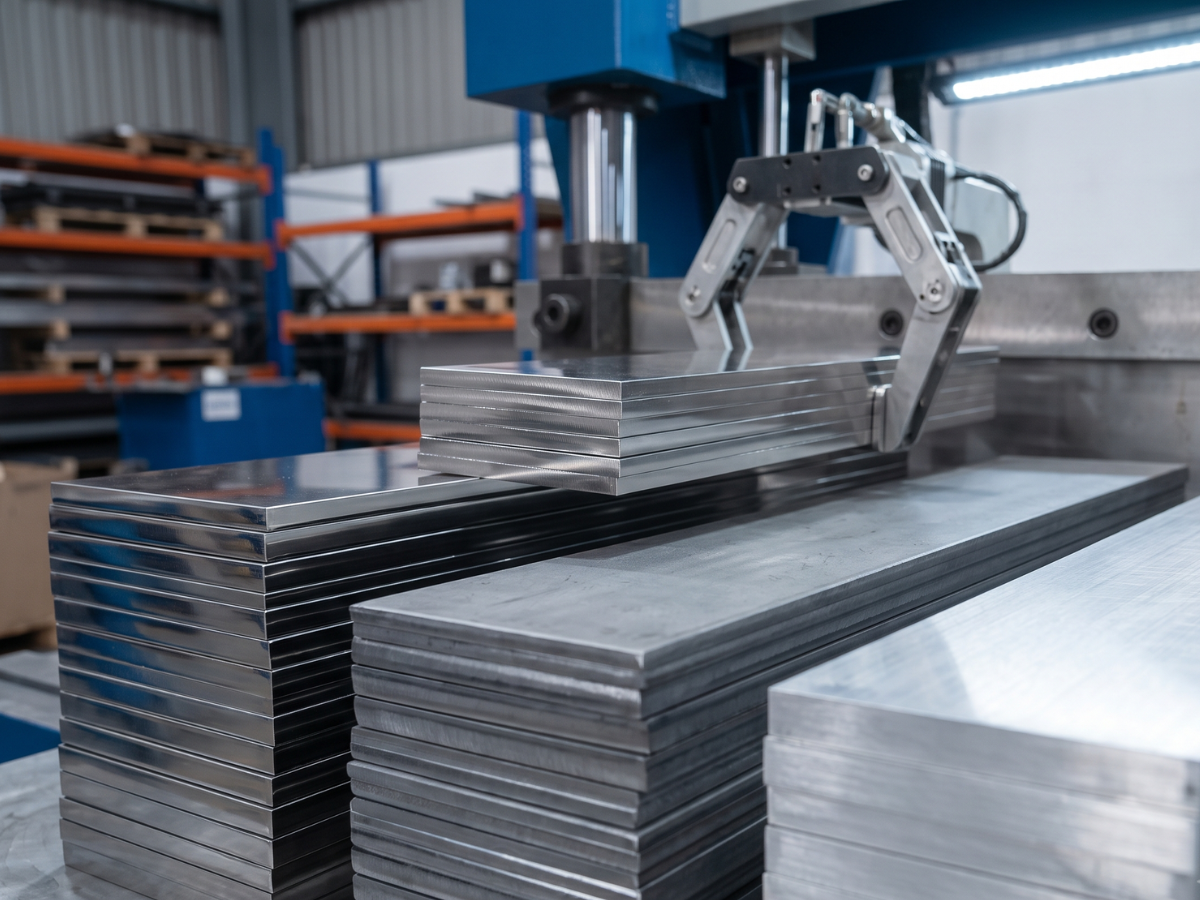
- Material stock. Providers who hold their own stainless, mild and aluminium stock, as NSSC does, turn jobs around faster than those buying in per order.
- Secondary processes. If your blanks need bending and folding or deburring, sourcing both from one shop saves logistics time and handling damage.
- Quoting transparency. Per-cut pricing, material costs and minimum order values should all be clear up front.
Finding Guillotine Cutting Near You in Johannesburg and Durban
For buyers searching “guillotine cutting near me Johannesburg” or “guillotine cutting near me Durban”, proximity genuinely matters. Sheet and plate are heavy, and freight on a few blanks can outweigh the cutting cost.
NSSC supplies guillotine cutting services from our Gauteng operation with national delivery, and we work with logistics partners who handle KZN runs weekly. For smaller jobs, we’d recommend asking any prospective supplier three quick questions: lead time on standard 304 and 316, whether they shear from your supplied sheet or theirs, and whether they can ship cut blanks securely strapped to prevent edge damage in transit. The answers tell you a lot about how seriously they take fabrication work.
Cost Factors, Tolerances, and Turnaround Times
Pricing a guillotine job isn’t complicated, but it does have moving parts. The three big drivers are material, cut count and setup.
Material cost is usually the largest single item, anywhere from 50% to 80% of the total, and it tracks the prevailing stainless or steel market. Grade 316 carries a nickel and molybdenum premium over 304, while 430 sits below both. We update our stainless sheet and plate cut-to-size pricing in line with mill movements, so quotes reflect current rates rather than stale lists.
Cut count drives machine time. A sheet split into four rectangles costs less than the same sheet diced into thirty strips, because each stroke takes time and each repositioning eats seconds.
Setup is a fixed overhead. For one-off jobs it dominates; for production runs of 500+ identical blanks it disappears into the per-piece rate. That’s why minimum order values exist: they cover the time to load, programme and prove the first cut.
Typical tolerances we hold on standard work:
| Parameter | Standard tolerance |
|---|---|
| Length / width (≤1000 mm) | ±0.2 mm |
| Length / width (>1000 mm) | ±0.5 mm |
| Squareness | ≤0.1° |
| Edge straightness | ≤0.1 mm per metre |
Turnaround for in-stock grades on straightforward blanks is usually 24-72 hours. Larger runs or non-stock grades extend that, but we’ll always confirm a firm date at the point of quote rather than leaving you guessing.
Why Buyers Choose NSSC for Guillotine Cutting
Strip this guide back to essentials and the right shearing partner holds stock, commits to tolerances, quotes transparently, and tells you honestly when another process is the better call. That’s the standard NSSC has held for over four decades:
- 40+ years working stainless steel, so blade clearance, grade behaviour and edge quality are dialled in, not guesswork.
- ISO-certified process, with tolerances held to ±0.2 mm on standard blanks and firm delivery dates confirmed at quote.
- 304, 316 and mild steel held in stock, so in-stock jobs ship in 24-72 hours instead of waiting on raw material.
- Honest scoping. When your job needs curves or holes, we point you to laser or plasma rather than forcing a straight-line tool onto a profiled part.
Need blanks cut accurately and fast?
If your next project needs blanks, strips or rectangular plate, send us the material, grade and quantity. We’ll quote on material, confirm the tolerance, and have your order shearing within days, not weeks. Request a quote from NSSC. For profiled or curved work, we’ll happily point you to our laser cutting service instead.
Frequently Asked Questions About Guillotine Cutting Services
What is guillotine cutting and how does it work?
Guillotine cutting, also called shearing, is a mechanical process that cuts sheet or plate metal in straight lines using a moving upper blade against a fixed lower blade. The sheet is clamped, the blade descends at a rake angle, and produces a clean, burr-light edge in a single stroke without heat or consumable gases.
What are the main benefits of using guillotine cutting services?
Guillotine cutting offers four key advantages: superior cost efficiency with the lowest cost-per-cut of any sheet-metal process, exceptional speed (single strokes take seconds), clean straight edges requiring minimal finishing, and excellent repeatability for batch work using CNC back gauges accurate to ±0.1 mm.
What materials can be cut using guillotine cutting?
Guillotine cutting works best on ductile materials. Mild and carbon steel shear up to 10-12 mm, stainless steel (304, 316, 430) up to 6 mm, and aluminium up to 8-10 mm. Material grade and thickness determine optimal blade settings and edge quality.
How accurate is guillotine cutting for tight tolerances?
Professional guillotine services typically maintain tolerances of ±0.2 mm on lengths up to 1000 mm, ±0.5 mm for longer dimensions, squareness within 0.1°, and edge straightness of ±0.1 mm per metre. CNC back gauges ensure consistency across batch runs.
What is the difference between guillotine cutting and laser cutting?
Guillotine cutting produces straight-line cuts economically without heat, making it three to five times cheaper per cut than laser. However, laser excels at curves, holes and intricate profiles. For rectangular blanks, guillotine is faster and more cost-effective; for detailed geometry, laser is necessary.
How long does guillotine cutting typically take from order to delivery?
Turnaround for standard in-stock grades on straightforward blanks is usually 24-72 hours. Larger production runs or non-stock materials may extend this timeline, but suppliers should confirm a firm delivery date at the quoting stage rather than providing estimates.