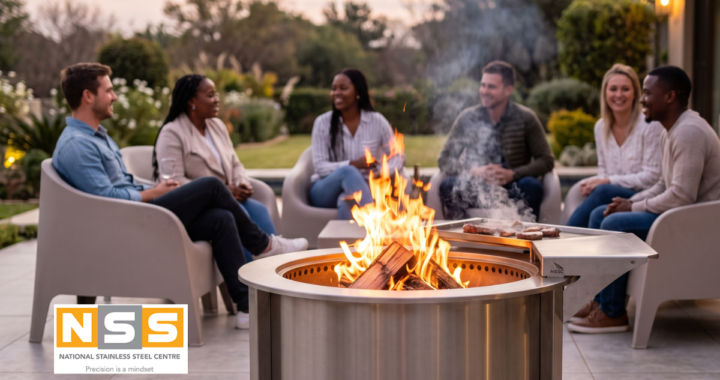
There’s something almost primal about gathering around an open fire under a Highveld sky: the crackle of wood, the hiss of meat hitting hot steel, the quiet that settles over a circle of friends once the first glass is poured. That’s the magic a good boma fire pit brings to any garden, lodge or patio. And in 2026, with outdoor entertaining bigger than ever in South Africa, getting the setup right matters more than picking out a new couch.
At NSSC, we’ve been working stainless steel for over 40 years, and we fabricate our boma fire pits in the same ISO-certified workshop where we make industrial stainless components for South African industry. That means the guide below isn’t marketing theory. It’s what we’ve learned building fire pits that have to survive Highveld storms, coastal salt air and a decade of hard use. From the cultural roots of the boma braai to the practical detail on sizes, stainless steel grades, safety and maintenance, here’s everything you need to choose well and buy once.
Key Takeaways
- A boma fire pit is a portable, freestanding outdoor fire bowl designed for both warmth and open-flame cooking, rooted in South African safari-lodge tradition and now a centrepiece for garden entertaining.
- Stainless steel (304 or 316 grade) is essential for longevity. Mild steel and Corten will rust and degrade, especially in coastal or harsh weather. NSSC builds exclusively in food-safe stainless, and states the grade in writing.
- Proper sizing matters. Choose your boma fire pit by seating capacity, from 600-700mm for couples to 1300mm+ for lodges and events.
- Cook in zones and use the flat pan for unexpected items like mussels and halloumi. Build the fire 30-45 minutes ahead with hardwood to settle into proper coals.
- Place the pit at least 3 metres from buildings and branches, on concrete or paving rather than timber decks, to stay safe and compliant with fire-season restrictions.
- Regular maintenance, wiping after each use, monthly exterior cleaning, and avoiding steel wool or chlorine cleaners, keeps a quality NSSC boma looking almost new after a decade outdoors.
What Is a Boma Fire Pit?
A boma fire pit is, at its simplest, a freestanding outdoor fire bowl, usually circular, designed for both warmth and open-flame cooking. Unlike a built-in braai or a bricked-in firepit, a boma is portable (or at least movable), often raised on legs, and built so a group can sit around it on all sides. Think of it as the modern descendant of the campfire: less rustic, more refined, and properly engineered to last.
The word “boma” originally referred to a livestock enclosure or a meeting place. Today, in South African outdoor culture, it’s shorthand for the whole experience: the fire, the food, the circle of chairs, the conversation. A quality fire boma anchors that whole scene.
The Cultural Roots of the Boma Braai
The boma braai grew out of safari-lodge tradition, where guests gathered in a reed-walled enclosure around a central fire after a day in the bush. Lodges across the Kruger, the Waterberg and KwaZulu-Natal turned it into a ritual: drinks, storytelling, slow-cooked meat over coals. From there it moved into private gardens, guesthouses and city patios. What started as a working enclosure became a social centrepiece, and the fire pit itself became the star of the show.
Key Features That Define a Quality Fire Boma
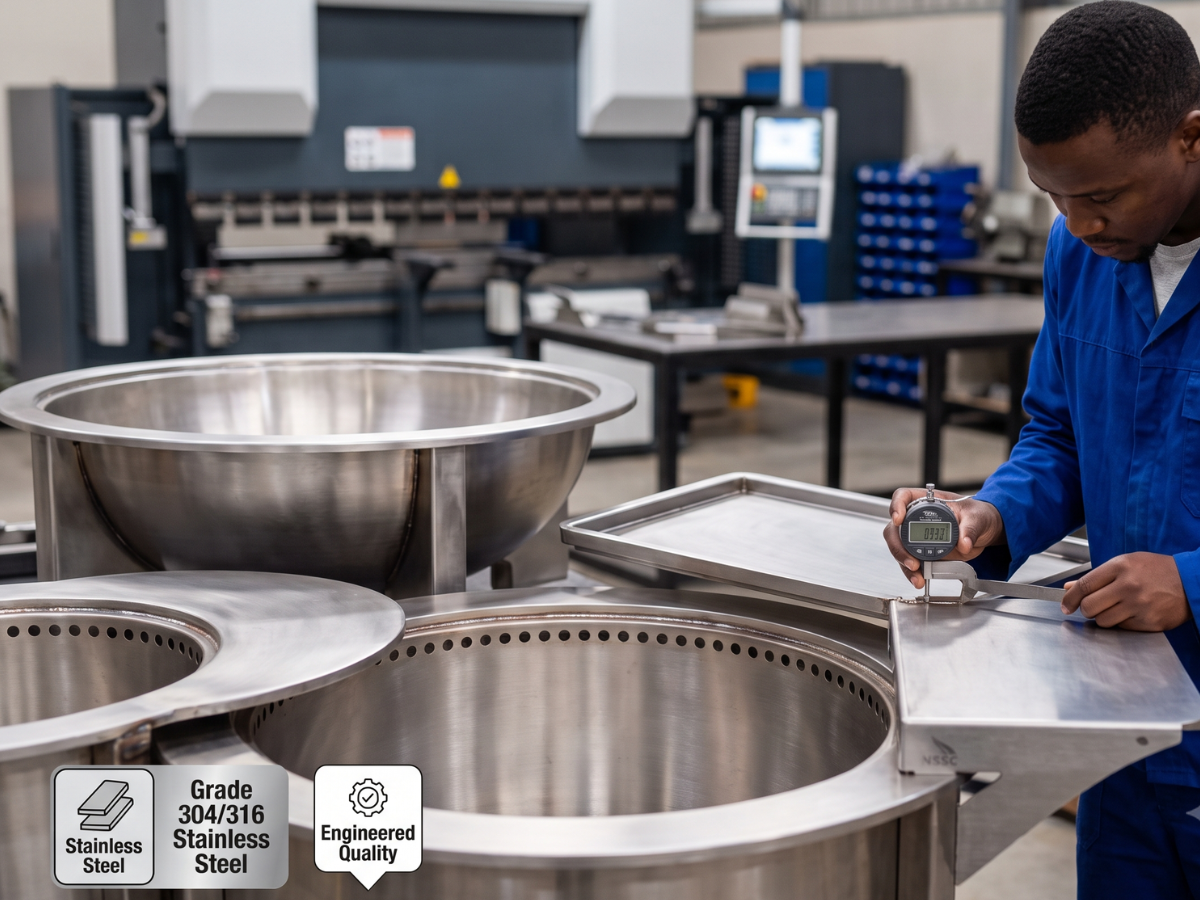
Not all fire bomas are created equal. We’ve seen plenty of mild-steel units rust through within a season or two, especially along the coast. If you’re investing in something that will live outside through summer storms and winter frost, these are the non-negotiables, and the exact standards NSSC builds to:
- Material grade. Stainless steel (304 or 316) for longevity. Mild steel and Corten rust; Corten does so by design, and it stains paving and weakens over time. Every NSSC boma fire pit is full stainless.
- Thickness (gauge). A heavier gauge holds heat better and resists warping. Look for at least 3mm on the bowl.
- Welded construction. Continuous welds, not spot-welds, especially on the bowl seams. This is standard industrial practice in our workshop.
- Drainage. A small drain hole stops rainwater pooling and rotting the base.
- Stable base or legs. A solid tripod or ring base keeps the fire safely off the ground, and off your lawn.
- Removable cooking surface. A flat top, swing-arm grid or fire-fryer pan turns the boma into a working braai.
Get those right and you’ve got something that will still look good in ten years. NSSC bomas are engineered to meet every point on that list, because they come out of the same shop, and the same standards, as our industrial stainless work.
Choosing the Right Stainless Steel Braai Pan
The cooking surface is where a boma earns its keep. A good stainless steel braai pan sits flush over the bowl, turning the open fire into a flat-top griddle, perfect for everything from boerewors to vegetables, paella, even pancakes for breakfast the next morning.
When NSSC makes ours, we focus on the details that matter in the real world:
- Grade 304 stainless steel: food-safe, corrosion-resistant, and won’t impart any metallic taste.
- Heavy gauge so the pan distributes heat evenly without hot spots or warping.
- A raised lip to catch fat and juices, so they don’t drip onto the fire and flare up.
- A central hole or removable disc so you can cook over open flame and on the flat surface at the same time.
If you’re comparing options, ask the supplier exactly which grade of stainless steel they use. “Stainless” alone isn’t enough, here’s why stainless steel resists rust, and why grade matters. NSSC states 304 or 316 grade in writing on every product, because after 40 years supplying stainless to industry, we know grade is the whole game.
Popular Boma Fire Pit Sizes and Designs
Sizing your boma comes down to two questions: how many people, and how much space?
| Size | Diameter | Best for | Typical seating |
|---|---|---|---|
| Small | 600-700mm | Couples, small patios | 2-4 people |
| Medium | 800-900mm | Family gardens | 4-8 people |
| Large | 1000-1200mm | Entertainers, guesthouses | 8-12 people |
| Extra-large | 1300mm+ | Lodges, restaurants, events | 12+ people |
Design-wise, the most common silhouette is the classic deep bowl on a tripod or ring base. Some bomas include a swing-arm grid; others, like NSSC’s fire-fryer boma, build the braai pan directly into the design so the fire and the cooking surface share one footprint.
Finish matters too. A brushed stainless steel finish hides fingerprints and minor marks better than a mirror polish, which is why most hospitality buyers choose it, and why it’s our default for lodge and restaurant orders.
How to Use a Braai Boma for Cooking and Entertaining
The trick with a braai boma is that you’re not just cooking, you’re hosting around the fire. The cooking happens in front of everyone, so the rhythm is different from a traditional walled-off braai area. A few things we’ve learned over the years:
- Build the fire early. Hardwood like rooikrans or kameeldoring needs 30-45 minutes to settle into proper coals.
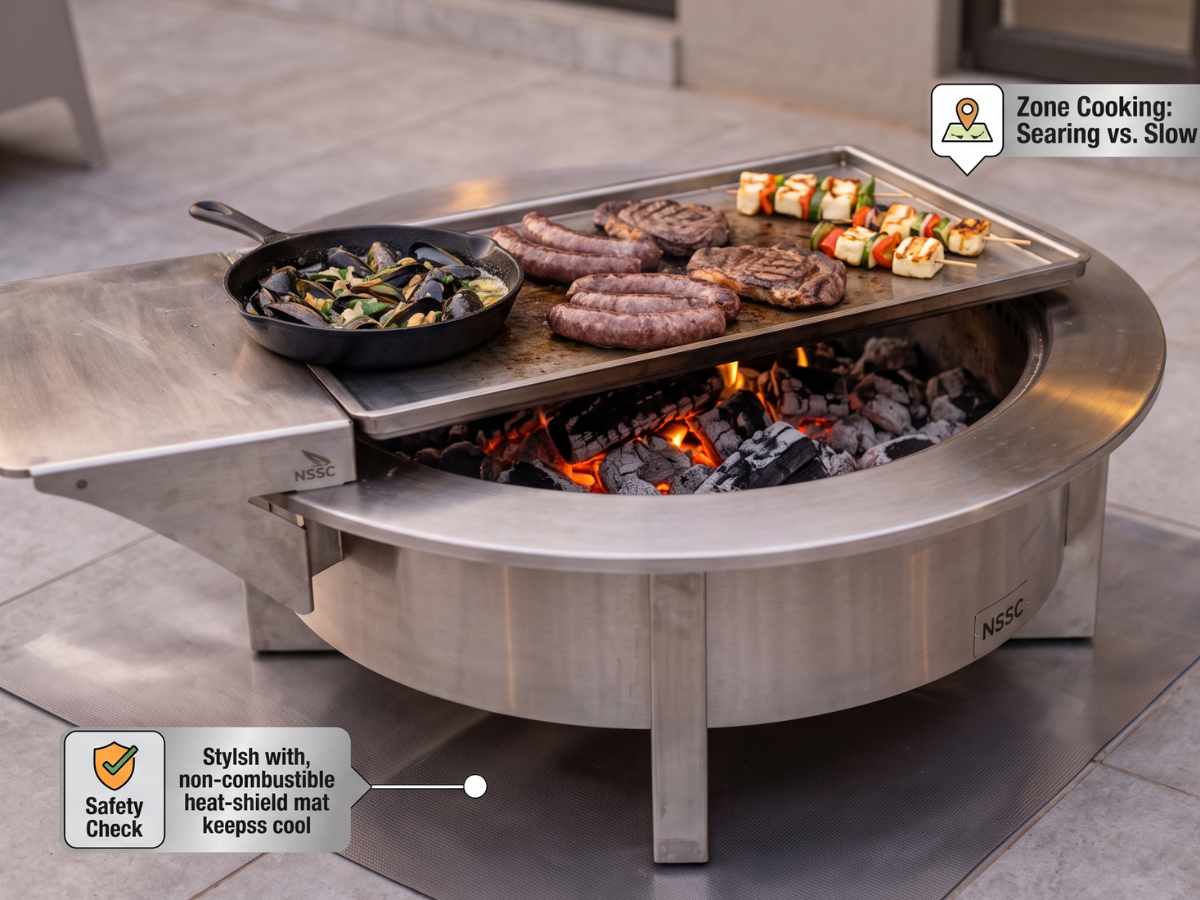
- Cook in zones. Push hotter coals to one side, leave a cooler zone on the other, so you can sear and slow-cook at once.
- Start with the slow stuff. Lamb, pork belly and whole chickens go on first. Boerewors and steak come later, when guests are hungry and the talking has died down.
- Use the flat pan for the unexpected. Mussels, prawns, halloumi, mielies in butter, anything that would fall through a grid.
- Keep the fire alive after dinner. That’s when the real conversations happen. Throw on a smaller log, top up the glasses, and let the evening run.
Safety, Placement, and Installation Tips
An open fire is still an open fire, even in a well-built boma. A bit of forethought goes a long way.
Placement
- At least 3 metres clear of buildings, eaves, and overhanging branches.
- Off timber decks unless you’re using a proper heat-shield mat. Concrete, paving or gravel is ideal.
- Sheltered from the prevailing wind, but never fully enclosed. You need airflow, and you need smoke to escape.
Setup
- Level the ground. A wobble in a 60kg fire pit full of burning coals is a problem you don’t want to discover at 9pm.
- Keep a bucket of sand or water nearby. Hose pipes are great until you realise the tap is around the corner.
- Never leave the fire unattended while children or pets are around.
Local rules
- Some estates and municipalities restrict open fires on high-risk fire-season days. Check before you light up, especially in the Western Cape between November and April.
Caring for Your Boma Braai to Extend Its Lifespan
Stainless steel is low-maintenance, not no-maintenance. Treat it well and it will outlast almost everything else in your garden.
After each use
- Let the bowl cool completely.
- Scrape out ash once it’s stone cold and dispose of it in a metal bin. Never plastic; embers can hide for hours.
- Wipe the braai pan with a damp cloth while still slightly warm. Stubborn bits come off with hot water and a non-abrasive scourer.
Monthly
- Wipe the exterior with warm soapy water and a soft cloth. Rinse and dry.
- For tea-staining (the faint brown marks you sometimes see near the coast), use a dedicated stainless steel cleaner and rub in the direction of the brush grain.
Never
- Use steel wool or chlorine-based cleaners. They damage the passive layer that protects the steel.
- Leave standing water in the bowl. Tip it out or check the drain hole is clear.
Do this and a quality NSSC fire boma will look almost new after a decade outdoors.
What to Look for When Buying a Boma Braai for Sale
There are a lot of boma braais for sale out there, and prices vary wildly, from budget mild-steel units at hardware chains to designer pieces. Before you commit, run through this checklist. It’s also a fair way to measure any supplier, including us:
- What’s the material, exactly? “Steel” usually means mild steel. Insist on 304 or 316 stainless steel in writing. NSSC provides this as standard.
- What’s the gauge? Anything under 2mm on the bowl will warp.
- Is it locally made? South African fabrication means easier warranty claims, replaceable parts, and support for local industry. NSSC fabricates every unit in South Africa.
- What’s included? Some bomas come with a pan, grid, ash tool and cover. Others charge extra for each. Ask for the full inclusions list.
- Warranty? A serious manufacturer backs the steel. Ask NSSC for current warranty terms on your chosen unit.
- Delivery and assembly. A large boma can weigh 50kg+. Check whether delivery is included and whether it ships assembled.
NSSC meets every point on that checklist, because it’s the same checklist we’d apply to any stainless component leaving our workshop. If you’d like to see what a properly engineered, fully stainless option looks like, shop the NSSC boma fire pit or browse the full product range. We fabricate everything in South Africa, in the same shop where we make our industrial stainless products, so the standard is identical whether you’re a lodge owner or a process engineer.
Why Buyers Choose NSSC
If you strip this guide back to its essentials, the right boma is full stainless, heavy-gauge, continuously welded, locally made, and backed by a supplier who knows the metal. That’s not a list we wrote to flatter ourselves. It’s the standard NSSC has held for over four decades:
- 40+ years working stainless steel, with a trading history that means we’re still here when you need a replacement part or a warranty claim.
- ISO-certified fabrication, the same quality system behind our industrial stainless supply, applied to every boma.
- Grade transparency, 304 or 316 stated in writing, never vague “stainless” claims.
- Made in South Africa, in-house, so nothing is outsourced and quality is controlled end to end.
Choosing a fire pit is a ten-year decision. NSSC is built to be the supplier still standing behind it in year ten.
Conclusion
A boma fire pit isn’t really about the steel, it’s about the evenings it makes possible. But the steel is what decides whether those evenings happen for two seasons or twenty. Choose a stainless build, get the size right for your space, treat it with a bit of respect, and you’ve got the centrepiece of every gathering you’ll host for the next decade.
Ready to anchor your next braai?
Have a look at the NSSC stainless steel boma fire pit: built in South Africa, made to last. Not sure on size or configuration? Contact our team and we’ll help you choose.
Frequently Asked Questions About Boma Fire Pits
What exactly is a boma fire pit?
A boma fire pit is a freestanding outdoor fire bowl, typically circular and raised on legs, designed for warmth and open-flame cooking. Unlike built-in braais, it’s portable and engineered so people can sit around all sides, combining the simplicity of a campfire with refined, modern engineering.
What material grade should I choose for a boma braai to prevent rust?
Choose stainless steel grade 304 or 316 for longevity and corrosion resistance. Avoid mild steel and Corten, which rust and weaken over time, especially in coastal areas. NSSC builds exclusively in 304 or 316 stainless, so a quality unit will last a decade or more with proper care.
What size boma fire pit do I need for entertaining?
Size depends on guest count and space. Small (600-700mm) suits 2-4 people; medium (800-900mm) works for families of 4-8; large (1000-1200mm) fits 8-12 guests; extra-large (1300mm+) suits lodges and events with 12+ attendees. NSSC can advise on the right size for your setup.
How long does it take to prepare coals in a braai boma?
Hardwood like rooikrans or kameeldoring takes 30-45 minutes to settle into proper coals. Building the fire early lets the coals reach the right temperature before you start cooking and entertaining around the fire.
Can I use a stainless steel braai pan on any boma fire pit?
Most quality boma fire pits accommodate a stainless steel braai pan as a removable cooking surface. Grade 304 stainless pans are food-safe and corrosion-resistant. Verify compatibility with your specific model before buying a pan separately; NSSC pans are matched to our bomas.
How do I maintain and clean my boma fire pit?
Let the bowl cool completely after use, then scrape ash into a metal bin. Wipe the braai pan with a damp cloth while warm. Monthly, clean the exterior with warm soapy water. Never use steel wool or chlorine-based cleaners, and avoid leaving standing water inside.
Why buy a boma fire pit from NSSC?
NSSC has worked stainless steel for over 40 years and fabricates every boma in its ISO-certified South African workshop, the same one behind its industrial stainless supply. You get full 304 or 316 stainless stated in writing, heavy-gauge welded construction, local support, and a supplier with the track record to stand behind the product long-term.