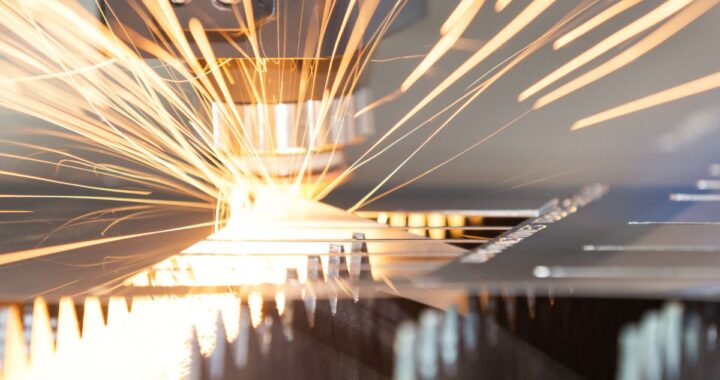
Laser cutting machine

How Advanced Laser Cutting Is Transforming Stainless Steel Processing in Johannesburg

Introduction

In the competitive manufacturing landscape of Gauteng, precision isn’t simply a nice-to-have – it is the benchmark. For stainless steel processing professionals in Johannesburg, the difference between on-time delivery and costly rework often comes down to how cleanly and accurately parts are delivered. That’s where laser cutting becomes not just a service but a strategic advantage.

At the National Stainless Steel Centre (NSSC), we don’t just cut steel – we engineer precision. With state-of-the-art fibre laser systems, over 40 years of combined stainless steel expertise and a location in Kempton Park geared for nationwide distribution, our laser cutting services deliver the speed, consistency and quality that high-achievement professionals demand. Whether you’re supplying the mining sector, civil infrastructure or automotive components, the pathway from drawing to delivery must be flawless. Below, we’ll unpack how advanced laser cutting is transforming stainless steel processing in Johannesburg and why it should be part of your strategic purchasing decision.

To achieve true precision in stainless steel processing, NSSC offers a complete range of specialised cutting and fabrication solutions. Our advanced laser cutting services deliver unmatched accuracy and clean edges across all stainless steel grades, while our high-powered plasma cutting services provide fast, efficient results for thicker materials. For straightforward, high-speed sheet processing, our guillotine cutting services ensure perfectly straight cuts with minimal waste. When projects demand complex perforations or intricate profiles, our CNC punching services offer precision and repeatability at scale. Finally, for components that require exact weld preps or aesthetic finishing, our bevelling services deliver smooth, uniform edges that meet the highest fabrication standards.

Key Points

  • The role of laser cutting in delivering speed, accuracy and repeatability for stainless steel .
  • How fibre-laser systems and automated workflows cut costs, waste and lead times for Gauteng manufacturers.
  • Why location, certifications and service integration matter when choosing a stainless steel processing partner in Johannesburg.
  • NSSC’s end-to-end value proposition: from prototyping to high-volume runs, for industrial sectors across South Africa.
  • Practical insights for decision-makers: what to ask, what to expect, and how to operationalise precision laser cutting in your supply chain.

Why Laser Cutting Matters for Modern Stainless Steel Processing

Precision and repeatability you can rely on

One of the most compelling advantages of laser cutting is the level of accuracy it delivers. Fibre laser systems enable tight tolerances and clean edges, reducing the need for secondary finishing and alignment checks. For industrial clients in Gauteng, that means less downtime and fewer supply-chain risks.

Speed and efficiency that meet demanding timelines

Laser cutting offers faster turnaround times compared with traditional methods. When deadlines are tight and volumes matter, being able to move from CAD file to finished part in record time is a major differentiator.

Material utilisation and sustainability benefits

Because the laser beam is narrow and precise, material waste is significantly reduced compared to older cutting methods. Nesting algorithms and automation further improve yield. Lower scrap translates into cost savings – especially when working with more expensive grades of stainless steel.

Versatility across industries and materials

Modern laser cutting systems handle a range of material grades (304, 316, Duplex, exotic alloys) and thicknesses – from thin sheets to substantial plates. They also support complex profiles, high-volume runs and custom requirements.

The Johannesburg Advantage – Why Location and Service Matter

Strategic Kempton Park hub

NSSC’s positioning in Kempton Park, near OR Tambo International Airport, means logistics and delivery across South Africa and Sub-Saharan Africa are streamlined. For manufacturers in Johannesburg that demand urgency and reliability, proximity matters.

Industrial-grade credentials you can trust

With ISO/TUV 9001 certification, detailed process controls and decades of expertise, NSSC has built strong credentials in precision stainless steel processing. These are the kind of trust signals decision-makers expect when sourcing fabrication partners.

Integrated services under one roof

Laser cutting doesn’t operate in isolation. To maximise value, NSSC integrates cutting with bending, rolling, welding and polishing. This dramatically reduces coordination risk, shortens lead-times and keeps deliverables aligned.

Tailored for high-volume and custom runs

From one-off prototypes to 10,000-unit production runs, NSSC’s facility is designed for scalability and repeatability. Whether the job demands unusual sizes, exotic alloys or tight timelines, the right infrastructure matters.

Key Technical Capabilities That Define Performance

Thickness and size range mastery

NSSC’s laser cutting capabilities cover stainless steel from 0.5mm up to 50mm thick and plate sizes up to 6 m x 2 m. This breadth supports everything from light-gauge brackets to heavy structural components.

Fibre laser systems for clean, burr-free edges

By using fibre lasers, NSSC ensures minimal heat-affected zones, tighter tolerances and edges ready for weld or assembly. Clients appreciate fewer downstream steps and quicker component integration.

Automated sheet-loading and nesting optimisation

Automation is a silent cost-saver – fewer manual steps, lower error rates, faster throughput and optimised material usage. That means competitive pricing and predictability for your supply chain.

Multi-grade compatibility, including exotic alloys

Whether it’s 304 or exotic Duplex or super-duplex alloys, NSSC handles these with the same care and precision. This capability reduces the need to source specialised processing elsewhere, simplifying your vendor footprint.

Industry Applications – Where Advanced Laser Cutting Delivers

Mining & petrochemical

In sectors where failure isn’t an option, parts must be precise and certified. NSSC’s laser-cut components serve complex assemblies in harsh environments, fulfilling rigorous standards.

Construction & civil infrastructure

Large plates, intricate profiles and high-volume elements (cladding, structural brackets, façade elements) benefit from the accuracy and speed of laser cutting.

Automotive & transport

Smaller components, tight tolerances, series production – laser cutting offers the repeatability and finish required when margin and time matter.

Water, sanitation & food processing

Clean finishes, corrosion-resistant materials and precise components are essential here. Laser cutting ensures parts are fit-for-purpose in harsh, regulated environments.

Engineering & automation

Robotics, machine frames, custom jigs and parts rely on precision. With no secondary finish, laser-cut parts feed directly into assembly – boosting OEE (overall equipment efficiency).

Conclusion

Precision is no longer a bonus – it’s the foundation of fabrication strategy in Johannesburg’s stainless steel sector. Advanced laser cutting offers accuracy, speed, sustainability and versatility. With the National Stainless Steel Centre’s combination of technology, experience and logistics, you gain a partner that aligns with high-performance expectations and industrial demands.

Ready to elevate your stainless steel processing? Partner with NSSC and experience laser cutting that aligns to your specs, timeline and scale.

Contact National Stainless Steel Centre

Address: Cnr Pomona Rd & 5th Ave, Kempton Park, 1619
Phone: 011 552 8800
Email: info@nssc.co.za
Website: nssc.co.za
Facebook: facebook.com/nationalstainlesssteelcentre
Instagram: instagram.com/nationalstainlesssteelcentre
Twitter: twitter.com/NSS_Centre
LinkedIn: National Stainless Steel Centre
Google Maps: Find us here

Frequently Asked Questions

Q1. What materials can you laser cut at NSSC?
We handle stainless steel grades including 304, 316, 3CR12, Duplex and exotic alloys – covering both standard and specialist alloy needs.

Q2. What thicknesses are supported by your laser cutting services?
Our fibre laser systems process stainless steel from as thin as 0.5 mm up to 50 mm thick and plate sizes up to 6 m × 2 m.

Q3. How quickly can my parts be delivered in Gauteng or further afield?
Based in Kempton Park and delivering across South Africa and Sub-Saharan Africa, we offer logistics solutions aligned to industry lead-time demands.

Q4. Do I need to do any post-processing after laser cutting?
In most cases no. Cuts arrive clean, with tight tolerances and minimal burr-finishing required – ready for welding, assembly or installation.

Q5. What industries do you serve with your laser cutting capabilities?
Our services support engineering & automation, agriculture & food processing, construction & civil infrastructure, mining & petrochemical, automotive & transport and water & sanitation.

Stainless Steel Plates vs Mild Steel Plates: Which One Should You Choose?

A Practical Breakdown for South African Fabricators, Engineers & Buyers

When it comes to industrial fabrication, choosing the right metal plate is a decision that can affect performance, lifespan, and long-term cost. In South Africa, stainless steel plates and mild steel plates are two of the most commonly used materials across construction, mining, and manufacturing sectors.

But how do you decide which one is right for your project?

Let’s compare both in terms of strength, corrosion resistance, cost, and practical application, so you can make a decision that’s built to last.

What Are Stainless Steel Plates?

Stainless steel plates are corrosion-resistant, high-strength metal sheets made primarily from iron, chromium, and sometimes nickel and molybdenum (depending on the grade). They’re known for their ability to withstand harsh conditions, high pressure, and long-term wear, without rusting or corroding.

Common grades used in South Africa include:

  • 304: General-purpose, strong corrosion resistance
  • 316: Marine-grade, chemical-resistant
  • 3CR12: Cost-effective and widely used in mining
  • Duplex: High strength + stress corrosion cracking resistance

 What Is Mild Steel?

Mild steel (also known as carbon steel) contains a low percentage of carbon (typically under 0.25%) and is known for its ductility, affordability, and ease of fabrication. While it lacks the corrosion resistance of stainless, it’s commonly used for indoor or coated applications where cost is a critical factor.

Metal Plate Comparison: Stainless Steel vs Mild Steel

Let’s put both options side by side.

FeatureStainless Steel PlatesMild Steel Plates
Corrosion ResistanceExcellent – suitable for harsh environmentsPoor – requires paint, galvanising, or coating
StrengthHigh tensile & yield strengthGood, but lower strength overall
FabricationRequires specific tools (harder to machine)Easier to cut, weld, and shape
CostHigher upfront costBudget-friendly
LongevityLasts decades with minimal maintenanceShorter lifespan, especially outdoors
MaintenanceLow – no coatings requiredHigh – needs ongoing protection
HygieneExcellent – smooth, cleanable surfaceNot suitable for hygienic environments

When to Choose Stainless Steel Plates

Go with stainless steel plates if your project:

  • Will be exposed to moisture, chemicals, or salt air
  • Requires high structural integrity and long-term durability
  • Is in a hygienic or sterile environment (food processing, pharma, medical)
  • Must comply with safety, fire, or corrosion standards
  • Involves heavy-duty steel plates for mining or pressure vessels

Yes, the initial cost is higher, but so is the value. Fewer replacements, less maintenance, and better long-term performance.

When to Choose Mild Steel Plates

Opt for mild steel if your project:

  • Is budget-sensitive and not exposed to corrosive conditions
  • Involves indoor applications or temporary structures
  • Doesn’t require high corrosion resistance
  • Needs easy weldability and high fabrication speed
  • Will be painted, galvanised, or otherwise coated

Mild steel gets the job done at a lower price, but only in the right context.

Best Steel for Fabrication: Who Wins?

In terms of workability, mild steel is easier to weld, cut, and shape. It’s softer, more forgiving, and requires less specialised equipment.

However, stainless steel plates offer unmatched post-fabrication performance, especially in demanding or exposed environments. So the real question is:

Do you want a plate that’s easy to work with… or one that outperforms for years to come?

Where South African Industries Stand

Across South Africa, stainless steel plates are dominating sectors like:

  • Mining & Petrochemical: Thanks to 3CR12 and Duplex grade corrosion resistance
  • Construction: For cladding, base plates, and fire-rated structures
  • Food & Beverage: For hygiene and ease of cleaning
  • Marine & Coastal: Where mild steel simply can’t survive the elements

That said, mild steel still thrives in cost-sensitive projects with lower environmental stress, think scaffolding, indoor frames, brackets, or agricultural structures.

Where to Buy Stainless Steel Plates in South Africa

Looking for reliable stock, precision cutting, and fast delivery?

At NSSC, we supply a wide range of heavy-duty steel plates, including:

  • 304 / 316 / 3CR12 / Duplex grades
  • Custom cut-to-size plates
  • Value-added services like bending, polishing, welding, and surface finishing
  • ISO TUV 9001-certified quality control

We’re not just a supplier, we’re a precision partner for industrial fabrication across the country.

Contact National Stainless Steel Centre

Address: Cnr Pomona Rd & 5th Ave, Kempton Park, 1619
Phone: 011 552 8800
Email: info@nssc.co.za
Website: nssc.co.za
Facebook: facebook.com/nationalstainlesssteelcentre
Instagram: instagram.com/nationalstainlesssteelcentre
Twitter: twitter.com/NSS_Centre
LinkedIn: National Stainless Steel Centre
Google Maps: Find us here

Final Word

Choosing between stainless steel plates and mild steel depends on more than just price. It’s about environment, strength, lifespan, and what your project demands now, and five years from now.

Want metal that goes the distance? Choose stainless.
Need quick, cost-effective fabrication? Mild steel may be the answer.

Need help deciding? NSSC is here to guide your next move.

What Makes Stainless Steel Suppliers in Johannesburg Stand Out?

When it comes to sourcing stainless steel materials, choosing the right supplier is key. For businesses and individuals in Johannesburg, the options may seem vast, but certain suppliers truly stand out. These suppliers excel not only in their range of offerings but also in their services and expertise. Here, we explore what sets the best stainless steel suppliers in Johannesburg apart and why they are worth considering for your next project.

The Core of a Good Stainless Steel Supplier

Extensive Product Range

Top suppliers offer a wide variety of stainless steel products, ensuring customers find exactly what they need. The most common offerings include:

  • Stainless Steel Sheets: Available in multiple sizes, grades, and finishes to suit different applications.
  • Stainless Steel Pipes: Used in plumbing, industrial systems, and structural projects.
  • Custom Stainless Steel Fabrication: Tailored solutions for unique project requirements.

A supplier with an extensive inventory ensures customers can source all their stainless steel needs under one roof.

Commitment to Quality

One of the defining traits of reputable stainless steel suppliers in Johannesburg is their commitment to quality. They source their materials from trusted manufacturers and adhere to stringent quality control processes. This ensures their products meet industry standards, whether it’s a simple stainless steel sheet or a complex custom stainless steel fabrication.

High-quality materials provide long-term durability, resistance to corrosion, and excellent performance across various applications, from construction to manufacturing.

Advanced Services Offered by Leading Suppliers

Precision Cutting and Shaping

Modern stainless steel suppliers offer advanced processing services to cater to diverse customer needs. These include:

  1. Laser Cutting: Highly precise and ideal for intricate designs.
  2. Water Jet Cutting: Suitable for clean, precise cuts without affecting the material’s properties.
  3. CNC Bending and Rolling: Enables accurate shaping of stainless steel sheets and plates.

Such services save customers time and ensure materials are ready to use.

Custom Fabrication Services

For unique project requirements, custom stainless steel fabrication is invaluable. Suppliers equipped with state-of-the-art machinery and skilled teams can design and create bespoke products, whether it’s a stainless steel pipe or structural components. This flexibility allows customers to bring their specific designs to life with ease.

Polishing and Finishing Options

Finishing services enhance the functionality and appearance of stainless steel products. From brushed finishes to polished, mirror-like surfaces, suppliers can provide a range of options to suit different projects. High-quality finishing ensures products look professional and last longer.

Why Choose Local Stainless Steel Suppliers in Johannesburg?

Faster Delivery and Accessibility

Proximity plays a significant role when selecting a supplier. Local stainless steel suppliers in Johannesburg offer faster delivery times compared to distant or international options. Customers can also visit the supplier’s facility to inspect materials or discuss project requirements in person. This accessibility helps build trust and ensures clear communication.

Supporting Local Businesses

Purchasing from local stainless steel suppliers contributes to the growth of Johannesburg’s economy. Supporting these businesses helps create jobs and strengthens the local industry.

Industries Served by Stainless Steel Suppliers in Johannesburg

Stainless steel is a versatile material used across numerous sectors. Leading suppliers cater to industries such as:

  • Construction: For structural components, railings, and roofing.
  • Automotive: Providing materials for exhaust systems and body parts.
  • Manufacturing: Used in machinery, tools, and equipment.
  • Food Processing: Ensuring hygiene and durability in equipment.
  • Water and Sanitation: For pipes, tanks, and fittings.

Their ability to serve a diverse range of industries highlights their versatility and expertise.

Contact National Stainless Steel Centre

Address: Cnr Pomona Rd & 5th Ave, Kempton Park, 1619
Phone: 011 552 8800
Email: info@nssc.co.za
Website: nssc.co.za
Facebook: facebook.com/nationalstainlesssteelcentre
Instagram: instagram.com/nationalstainlesssteelcentre
Twitter: twitter.com/NSS_Centre
LinkedIn: National Stainless Steel Centre
Google Maps: Find us here

Frequently Asked Questions

1. Why is stainless steel a preferred material?

Stainless steel is corrosion-resistant, durable, and low-maintenance, making it ideal for various applications. Its aesthetic appeal and recyclability further add to its popularity.

2. How do I choose the best stainless steel suppliers in Johannesburg?

Look for suppliers with a strong reputation, extensive product range, advanced services, and quality certifications. Customer reviews and recommendations can also help.

3. What is custom stainless steel fabrication?

Custom fabrication involves creating stainless steel products tailored to specific designs or dimensions. It’s commonly used for unique projects that require precise specifications.

4. Do local suppliers offer delivery services?

Yes, most local stainless steel suppliers in Johannesburg provide delivery services, ensuring customers receive their materials on time.

5. Can suppliers provide assistance with material selection?

Many suppliers offer expert advice to help customers choose the right materials and services for their projects. They consider factors like application, budget, and durability requirements.

Conclusion

Choosing the right stainless steel suppliers in Johannesburg can significantly impact the success of your project. With their commitment to quality, advanced services, and accessibility, leading suppliers offer value that goes beyond just materials. Whether you need stainless steel sheets, pipes, or custom fabrication, opting for a reputable local supplier ensures efficiency, cost savings, and peace of mind.

Effective Processes of Bending Stainless Steel

Effective Processes of Bending Stainless Steel

Stainless steel is widely used in construction for its strength and durability. When it comes to shaping this material, specialised tools and precise techniques are required—especially for stainless steel bending. This process uses advanced equipment and is subjected to strict guidelines to ensure that the final product meets international quality standards. This strict process makes sure the steel’s strength is kept intact, ready for the tough demands of building projects.

Selecting a bending method

Different methods can be used to bend stainless steel, and the best one will vary based on the specific requirements of your project and what you need the metal to do. Choosing the appropriate bending technique is crucial for shaping the stainless steel into the exact sizes and angles required for your project.

CNC bending brakes

Computer numerical control (CNC) machining is a method that uses programmed software to control factory machines. This method is particularly useful in stainless steel bending, as it increases efficiency and accuracy. CNC machines can bend metal sheets of all sizes with precision, cutting down on waste and ensuring consistent outcomes.

Press brakes equipped with CNC technology can bend metal sheets precisely. These machines may use a V-block tool fixed to a stationary base and a top beam that moves to apply force. This precision allows for the production of metal components that meet various design requirements. With CNC bending brakes, stainless steel bending is more adaptable for multiple applications across different industries.

Other important factors

The bending process might also involve cooling methods and lubricants like oil or water to enhance the bending quality and prevent the steel from cracking. Moreover, it’s crucial to select an appropriate grade of stainless steel. Austenitic types like 304 and 316 are typically more ductile and easier to bend compared to martensitic varieties like 410 or 420.

Partnering with bending professionals

For the best results in stainless steel bending, working with a seasoned manufacturer is recommended. The National Stainless Steel Centre, or NSSC, is a top choice in South Africa, offering a variety of stainless steel grades, including 304L and 316L. For more information or to get a quote, visit NSSC.co.za.

Contact National Stainless Steel Centre

Address: Cnr Pomona Rd & 5th Ave, Kempton Park, 1619
Phone: 011 552 8800
Email: info@nssc.co.za
Website: nssc.co.za
Facebook: facebook.com/nationalstainlesssteelcentre
Instagram: instagram.com/nationalstainlesssteelcentre
Twitter: twitter.com/NSS_Centre
LinkedIn: National Stainless Steel Centre
Google Maps: Find us here

All the Essential Information Regarding Plasma Cutting of Stainless Steel

All the Essential Information Regarding Plasma Cutting of Stainless Steel

When it comes to dividing stainless steel for your projects, you’ll need a straightforward, fast, and cost-efficient technique without compromising on quality. Stainless steel plasma cutting fits this bill, offering a rapid and economical solution. This method uses a diverse range of amperages and gases, enabling precise cuts tailored to various specifications.

The advantages of plasma cutting

The construction of the plasma cutting machine plays a key role in the resulting quality of stainless steel cuts. Imperfections in the cutting table can lead to issues with the angularity and smoothness of the edges. The good news is that world-class industrial plasma cutters can prevent such issues. They use specific gas mixtures to slice through stainless steel, resulting in cuts that are accurate and do not damage the material. The edges come out smooth and often with a polished look.

Plasma’s capacity to handle stainless steel of various thicknesses, from as thin as 3mm to as thick as 100mm, makes it a versatile choice. To achieve the highest degree of precision, it’s vital to select the appropriate plasma source and cutting table. Additionally, the right gases and output currents are essential to optimise cutting speed and quality.

The process of stainless steel plasma cutting

High-definition plasma systems are typically CNC-controlled, reducing manual input and delivering consistently precise cuts. Established stainless steel manufacturers can process large plates with advanced machinery that includes oversized beds and dual torches to meet high-volume demands.

Capabilities of plasma cutting machines

Stainless steel plasma cutting machines are adept at handling a range of stainless steel variants such as 3CR12, 316L, and 304L. They can even tackle coated or slightly contaminated stainless steel, provided there’s a clean, solid grounding point near the area to be cut.

Considering stainless steel plasma cutting for your next project? If stainless steel plasma cutting seems like the right fit for your project, consulting with specialists can provide deeper insights. Contact the National Stainless Steel Centre for a detailed quote and information about our plasma cutting services, and discover how we can assist you in achieving precision and efficiency in your stainless steel projects.

Contact National Stainless Steel Centre

Address: Cnr Pomona Rd & 5th Ave, Kempton Park, 1619
Phone: 011 552 8800
Email: info@nssc.co.za
Website: nssc.co.za
Facebook: facebook.com/nationalstainlesssteelcentre
Instagram: instagram.com/nationalstainlesssteelcentre
Twitter: twitter.com/NSS_Centre
LinkedIn: National Stainless Steel Centre
Google Maps: Find us here

Stainless Steel Manufacturing: How It’s Made and Processed in South Africa

Stainless Steel Manufacturing: How It's Made and Processed in South Africa

Close-up of brushed stainless steel sheet showing its reflective, textured surface

If you're specifying stainless steel for a project, or trying to work out why one supplier's material behaves differently to another's, it helps to understand how stainless steel is made before it ever reaches a cutting table. Manufacturing is the first stage in a much longer journey, and the choices made at that stage, the alloy mix, the rolling process, the finish, determine what the material can and can't do later on.

Whether you're sourcing raw material or ordering finished, cut-to-size components, working with an established stainless steel manufacturer and supplier means every stage of that journey, from understanding the material to cutting it to your exact specification, happens with people who know what they're doing at each step. This article walks through how stainless steel is actually manufactured, then explains what happens next, once that manufactured material needs to become a finished part.

What Is Stainless Steel?

Stainless steel is a steel alloy containing at least 10.5% chromium. That chromium reacts with oxygen to form a thin, invisible oxide layer on the surface of the metal, and it's this layer, not the steel itself, that gives stainless steel its corrosion resistance. If the surface is scratched or cut, the layer reforms on its own, provided the exposed metal isn't contaminated by carbon steel particles. Depending on the grade, manufacturers also add nickel, molybdenum and other elements to improve strength, weldability or resistance to specific environments, which is why not all stainless steel behaves the same way.

The Stainless Steel Manufacturing Process, Step by Step

Stainless steel production is a mill-level process, carried out in large-scale facilities rather than on-site at a processing centre. It generally follows five manufacturing stages.

1. Melting and Refining

Manufacturing starts with melting steel scrap, along with chromium, nickel and other alloying elements, in an electric arc furnace. The molten metal is then refined, typically using an argon oxygen decarburisation (AOD) process, to remove excess carbon and impurities while keeping the alloy composition on target. This stage is where a batch of steel becomes a specific grade.

2. Casting

Once refined, the molten steel is cast into a solid form, usually as slabs for flat products like sheet and plate, or as billets for long products like bar. Continuous casting is the standard method, feeding molten steel through a cooling process that solidifies it into a continuous strand before it's cut to length.

3. Hot Rolling

The cast slabs or billets are reheated and passed through a series of rollers under high pressure, reducing their thickness and stretching them into coil or plate. Hot rolling happens above the steel's recrystallisation temperature, which makes the material easier to shape but leaves a rougher, scaled surface that needs further treatment.

4. Annealing and Pickling

Hot rolled steel is hard and brittle straight off the rollers, so it's heat treated (annealed) to relieve internal stress and restore its mechanical properties. It then goes through pickling, an acid treatment that strips away the oxide scale left by hot rolling and re-establishes the chromium oxide layer that gives the steel its corrosion resistance. This step, not the melting stage, is really where stainless steel becomes properly stainless.

5. Cold Rolling and Finishing

For thinner gauges or brighter, smoother finishes, annealed and pickled coil goes through cold rolling, further reducing thickness at room temperature. The material may then be annealed and pickled again, and finished to a specific surface texture, from a dull matte to a mirror polish, depending on what the end application calls for.

By the end of this process, the mill has produced standard-sized coil, sheet, plate or bar in a defined grade and finish. For a full breakdown of the differences between common grades like 304, 316 and 3CR12, and which applications suit each one, see our complete grades guide.

From Manufactured Material to Finished Component

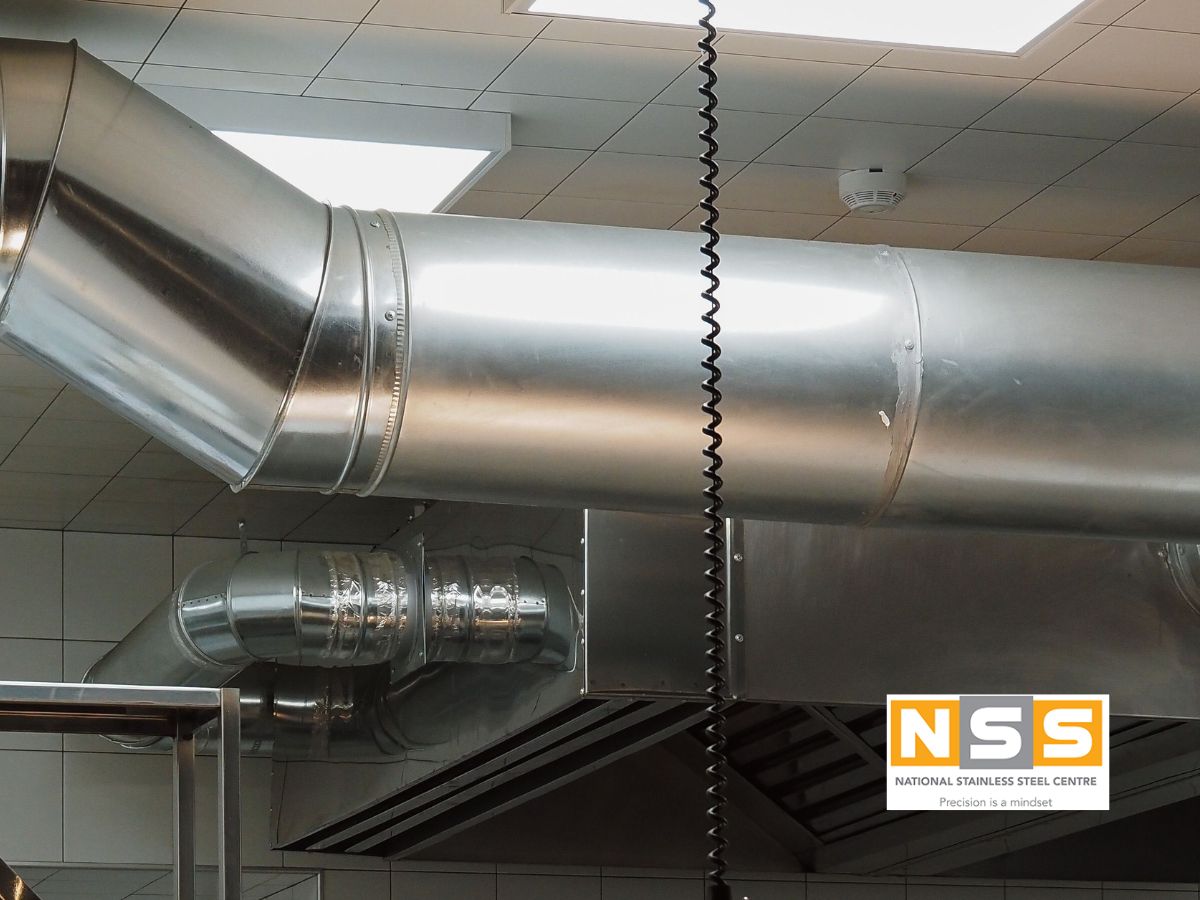
Stainless steel ductwork fabricated and installed for a commercial kitchen extraction system

Manufactured stainless steel rarely matches a project's exact dimensions. A mill produces standard coil widths, plate sizes and bar lengths, not the specific bracket, panel or tube a particular job needs. That's where cut-to-size stainless steel comes in, taking manufactured material and cutting, forming and finishing it to a project's exact specification, without the waste or lead time of ordering custom mill runs.

Depending on the shape, thickness and finish required, that can involve several different processes. Guillotine cutting shears straight lines through sheet and plate quickly and cleanly, and is typically the fastest option for straightforward cuts. Water jet cutting uses a high-pressure stream of water and abrasive to cut intricate shapes without generating heat, which matters when heat distortion or changes to the material's properties aren't acceptable. For tube and pipe that needs to be formed into curves or angles rather than cut flat, CNC tube bending shapes the material to a precise radius without kinking or weakening the tube wall. Laser cutting and plasma cutting cover other parts of this same stage, each suited to different thicknesses, tolerances and turnaround requirements.

None of these processes affect the corrosion resistance built in during manufacturing, provided the cut or formed edge is handled correctly. The chromium oxide layer reforms on any freshly exposed surface on its own, the same way it does after the pickling stage at the mill.

Frequently Asked Questions

What is the stainless steel manufacturing process?

Stainless steel is manufactured by melting scrap steel with chromium, nickel and other alloying elements in an electric arc furnace, then refining and casting it into slabs or billets. These are hot rolled, annealed, pickled and often cold rolled to reach the final thickness and finish before being supplied as coil, sheet, plate or bar.

What is the difference between manufacturing and fabrication?

Manufacturing is producing the raw stainless steel material itself, melting, casting and rolling it into coil, sheet or plate at a mill. Fabrication is the next stage, cutting, bending and finishing that material into components for a specific project, which is where a processing centre comes in rather than the original mill.

How long does the stainless steel manufacturing process take?

From melting to a finished coil or plate, manufacturing typically takes several weeks at the mill, depending on grade and order volume. Once the material reaches a processor, cutting and forming it into finished components can usually be completed in a matter of days rather than weeks.

Does cutting stainless steel to size affect its corrosion resistance?

No, cutting stainless steel to size does not affect its corrosion resistance, provided the cut edge is finished correctly. The chromium oxide layer that protects the material reforms on any newly exposed surface, including a freshly cut edge, as long as it isn't contaminated with carbon steel residue.

Why does manufactured stainless steel need further processing before use?

Manufactured stainless steel typically arrives as standard-sized coil, sheet, plate or bar, which rarely matches a project's exact dimensions. Cutting, forming and finishing it to size turns raw manufactured material into a ready-to-install component, without the cost or lead time of a custom mill order.

Defying Decay: Can Stainless Steel Rust?

Defying Decay: Can Stainless Steel Rust?

In the realm of construction and design, stainless steel is a stalwart, known for its sleek finish and robust resistance to corrosion. But the question remains: can this celebrated material succumb to rust?

Understanding Stainless Steel

Stainless steel is an alloy, incorporating a minimum of 10.5% chromium which gives it its notable resistance to tarnishing and rust. The market boasts over 150 varieties, each tailored for specific environments and applications. Its appeal lies in its low maintenance and resistance to oxidation and staining, making it a prime choice for projects where aesthetics are paramount.

Despite its formidable properties, stainless steel is ‘stainless’ not ‘stainfree’. The likelihood of rusting hinges on the chromium content; the higher it is, the more resilient the steel. However, without proper maintenance, even stainless steel can show signs of corrosion over time.

The Battle Against Rust

The composition of stainless steel is the frontline in its defence against corrosion. The alloy’s elements can significantly influence its vulnerability to rust. Environmental factors, such as chlorine-rich swimming pools or salty sea air, can expedite the corrosion process.

Maintenance is the key to preserving the chromium oxide layer that shields the steel from rust. This protective layer can regenerate if the steel is cleaned and maintained correctly, even after mechanical damage.

NSSC’s Precision-Crafted Stainless Steel

At NSSC, precision is not just a buzzword; it’s the cornerstone of our ethos. Our range of stainless steel, including locally manufactured 304L, 316L, and high alloy grades, is crafted to meet the demands of various corrosive environments.

Innovative Processing for Enhanced Durability

Our advanced processing services, such as laser and water jet cutting, are meticulously calibrated to enhance the material’s durability and finish. By doing so, we increase its resistance to the elements that cause rust.

Tailored Solutions for Diverse Industries

NSSC, strategically located near the bustling OR Tambo International Airport, serves a myriad of sectors across South Africa and internationally. Our stainless steel products are engineered to endure, providing a reliable foundation for industries from agriculture to petrochemical and beyond.

Proactive Measures for Rust Prevention

Design and fabrication stages are critical in ensuring the longevity of stainless steel. At NSSC, we advocate for designs that minimize water retention and promote air circulation. During fabrication, we take stringent measures to prevent cross-contamination with other metals, which can heighten the risk of rust.

Regular maintenance is paramount. NSSC recommends routine cleaning with appropriate solutions and the application of rust-resistant coatings to safeguard the integrity of the steel.

Conclusion

While stainless steel can rust under certain conditions, NSSC’s commitment to quality and precision ensures that our clients receive products designed to minimize this risk. Our expertise and innovative processing techniques stand as a testament to our dedication to delivering stainless steel solutions that endure.

NSSC’s Guide to Buying Stainless Steel Flat Bar: Where and How to Purchase

NSSC’s Guide to Buying Stainless Steel Flat Bar: Where and How to Purchase

Whether you are venturing into a grand architectural project or optimizing a petrochemical process, a critical component that stands central to your operations is the stainless steel flat bar. Being a versatile player in various industries, it is pivotal to understand what it is, its applications, and where to source the best. Herein, the National Stainless Steel Centre (NSSC) carves out a detailed guide to assist you in making an informed decision.

CNC stands for Computer Numerical Control. In the realm of tube bending, this technology has revolutionised the way tubes are shaped and formed. By harnessing the power of computer-aided designs and intricate machinery, CNC tube bending achieves exact curvatures and forms with unparalleled precision.

Understanding the Stainless Steel Flat Bar

Before diving into the purchase, understanding the essence of a stainless steel flat bar is crucial. It is a resilient material, available in grades such as 304L and 316L, known for its strength and resistance to corrosion, making it a favourite in an array of industries, including the construction and automotive sectors. Its adaptability is what makes it a go-to for various projects, fulfilling both functional and aesthetic requirements.

Bending Stainless Steel Flat Bar to Your Will

Shaping the flat bar to meet your specific needs is a skill mastered at NSSC. Utilizing high-definition plasma, laser cutting and water jet cutting technologies, coupled with CNC bending, the flat bar can be crafted into intricate designs without compromising its innate strength. Whether it is tube bending or section rolling, the expertise at NSSC ensures that the integrity of the material remains unyielding.

Sourcing from the Best: Why NSSC?

When considering a purchase, the pressing query often is — where can one find a stainless steel flat bar? Nestled in the core of Gauteng, Kempton Park, NSSC prides itself on a rich 30-year history in the stainless-steel domain, providing a range of high-alloy grades along with tailored solutions. Furthermore, NSSC is adept at cutting flat bars from oversized plates and accommodating various thicknesses of stainless steel, enhancing its offerings to meet diverse needs.

What sets NSSC apart is the adherence to TUV standards, promising international quality right at your fingertips. Leveraging a broad network of global suppliers, NSSC brings to you materials unseen in the local markets, ensuring a product that aligns with your precise needs, every time.

Crafting a Future with Stainless Steel Flat Bar

As we forge into a future rife with potential, embracing the strength and versatility of stainless steel flat bars through NSSC’s guidance could be your gateway to quality and precision. Serving a plethora of sectors including mining, water & sanitation, and the private sector, NSSC remains committed to propelling South Africa and the international community into a future brimming with quality and precision.

Take your project to the next level with NSSC — where expertise meets excellence.

Benefits of Stainless Steel Channels

Benefits of Stainless Steel Channels

Stainless steel channels play a crucial role in ensuring stability and durability in construction projects, especially those that require heavy-duty structural support. Available in a variety of sizes and shapes, including custom options, these channels are fabricated from C-shaped, hot-rolled steel that is bent into a U-shape. Specific inner radii are maintained at the inside corners. The channels are then joined at the angles using welding techniques such as lap joints or butt joints, with a minimum overlap of at least 5 centimetres or 2 inches.

Why you should opt for stainless steel channels

Stainless steel channels offer several advantages that make them preferred for many construction projects, particularly those exposed to corrosive elements such as saltwater, chemicals, or acids. Here’s why:

  • Enhanced strength-to-weight ratio – Thanks to its structural integrity and composition, stainless steel channels provide an excellent strength-to-weight ratio.
  • Modern aesthetics – The sleek, smooth surface of stainless steel channels lends a contemporary and attractive look to any structure.
    Exceptional corrosion resistance – Well-suited for a range of applications, stainless steel channels offer excellent resistance to corrosion from substances like chlorine, water, alkaline solutions, and acids.
  • Ease of manufacturing – Stainless steel is highly workable, allowing for easy welding, cutting, machining, and shaping. This makes it simple to customise channels for specific project needs.
  • Easy maintenance – Stainless steel channels are easy to clean, which is particularly beneficial for environments that require high sanitation standards, such as food processing plants and healthcare facilities.
  • Heat and fire resilience – High-quality stainless steel channels can withstand high temperatures and resist scaling, offering reliable heat and fire resistance.
  • Versatility – Stainless steel channels are incredibly versatile and can be used in a multitude of construction projects, ranging from bridges and high-rise buildings to storage facilities and other metal structures.

Ensuring you get the best materials

To make the most of these benefits, it’s essential to source your stainless steel channels from a trusted manufacturer and supplier. Partnering with an experienced provider like the National Stainless Steel Centre will guarantee you get the right type and quality of stainless steel channels tailored to your project needs.

We offer stainless steel channels in various grades and sizes, ensuring that your specific application requirements are met. For a personalised estimate and more information on our services, feel free to contact us.

Decoding the Stainless Steel Flat Bar: Your Comprehensive Guide

Decoding the Stainless Steel Flat Bar: Your Comprehensive Guide

In the world of structural and aesthetic development, the stainless steel flat bar holds a prominent place, renowned for its strength, resistance, and versatility. From construction to automobile manufacturing, it remains a prime choice for professionals globally. Delve into the intricate world of stainless steel flat bars with the National Stainless Steel Centre (NSSC) – your premier destination for precision-engineered solutions in South Africa.

What is a Stainless Steel Flat Bar?

In layman’s terms, a stainless steel flat bar is a rectilinear bar boasting a flat surface and sharp edges, known for its resistance to corrosion and remarkable durability. At NSSC, we house a variety of grades including but not limited to 304L and 316L, meeting international standards with TUV-certified procedures, tailored to a range of applications across various industries.

The Technical Mastery Behind Crafting Stainless Steel Flat Bar

At NSSC, the creation of a stainless steel flat bar goes beyond manufacturing — it’s a synthesis of precision technology and unparalleled expertise. Leveraging a plethora of processes including laser cutting, high-definition plasma cutting, and guillotining, we facilitate crafting materials that bear the mark of true craftsmanship, meeting every precise requirement of our diverse clientele.

Procuring the Finest Stainless Steel Flat Bar

The quest to source premium quality stainless steel flat bars finds its destination at NSSC. Situated strategically at the Aerotropolis epicentre in Gauteng, Kempton Park, we extend an extensive inventory that resonates with international quality and local sensibilities. Our global network of suppliers ensures the provision of exotic materials customized to meet unique demands, making us the go-to hub for both domestic and international clients.

Drawing upon 30 years of rich experience in the stainless steel industry, NSSC remains committed to evolving, with a clear vision to pioneer the future of stainless steel processing in South Africa. Serving a gamut of sectors including agricultural, architectural, and the private sector, we envisage forging a future where quality meets precision at every juncture.

Embark on a journey of exploration with NSSC as we guide you through the nuanced world of stainless steel flat bars, promising not just a product but a partnership in building a future steeped in quality and precision.

Experience the NSSC commitment – where every detail is a stroke of mastery.

Delved deep into the world of stainless steel flat bars with our guide. Don’t stop there. Continue your exploration with our subsequent piece, “The Top Frequently Asked Questions About Stainless Steel Flat Bar Answered.” With NSSC’s expertise, get all your pressing questions addressed, ensuring you’re always a step ahead in the realm of stainless steel. Dive in now!